Are Holo Pokémon Cards Worth More? Holo vs Reverse Holo
On a holo the artwork shines and the card body is matte. On a reverse holo it is the other way round. Which one is worth more depends entirely on the set.
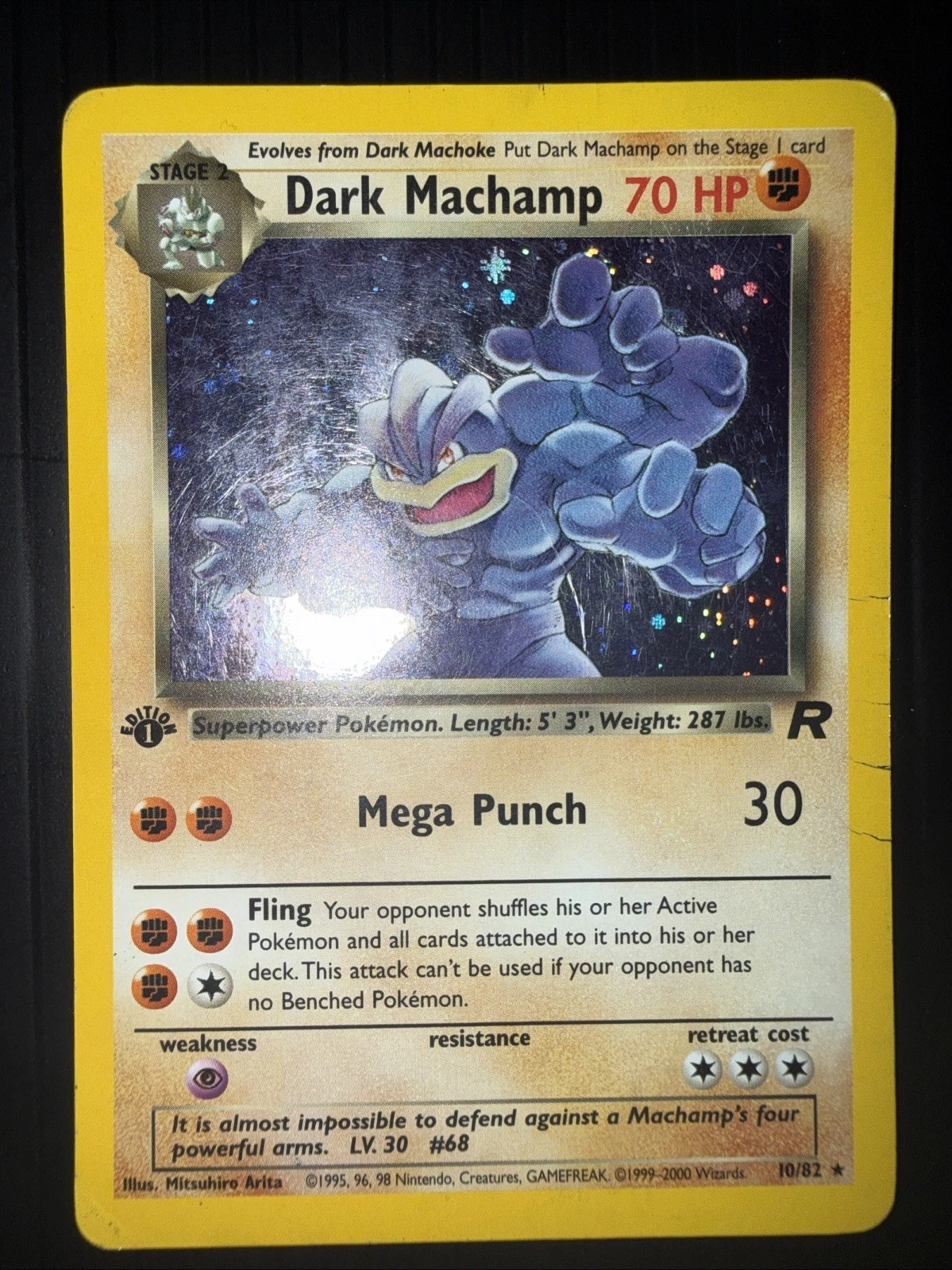
Short version: on a regular holo the artwork box shines and the rest of the card is flat matte cardboard. On a reverse holo it is the opposite — the card body shines and the artwork sits matte in the middle of it. That is the whole visual test, and it takes about ten seconds.
Whether the holo is worth more than the reverse holo is a separate question, and the answer changes set by set. In vintage Wizards of the Coast sets, holo meant something — it was the top rarity tier and it carries a large premium over the non-holo cards printed beside it. In current sets, nearly everything has a shiny version, so “it’s a holo” barely narrows anything down.
How do I tell a holo from a reverse holo?
Hold the card under a light and tilt it. Watch where the shine moves.
| Regular holo | Reverse holo | |
|---|---|---|
| Artwork window | Shiny, patterned foil | Matte, ordinary printed ink |
| Border, name bar, text box | Matte cardstock | Shiny foil, often patterned |
| Where light travels as you tilt | Inside the picture only | Everywhere except the picture |
| How it reads across a room | A gleaming picture on a plain card | A gleaming card with a plain picture |
Bulbapedia describes the reverse holofoil print as carrying “Holofoil throughout the card except the artwork window”, which is exactly what you are checking for.
Two things that trip people up:
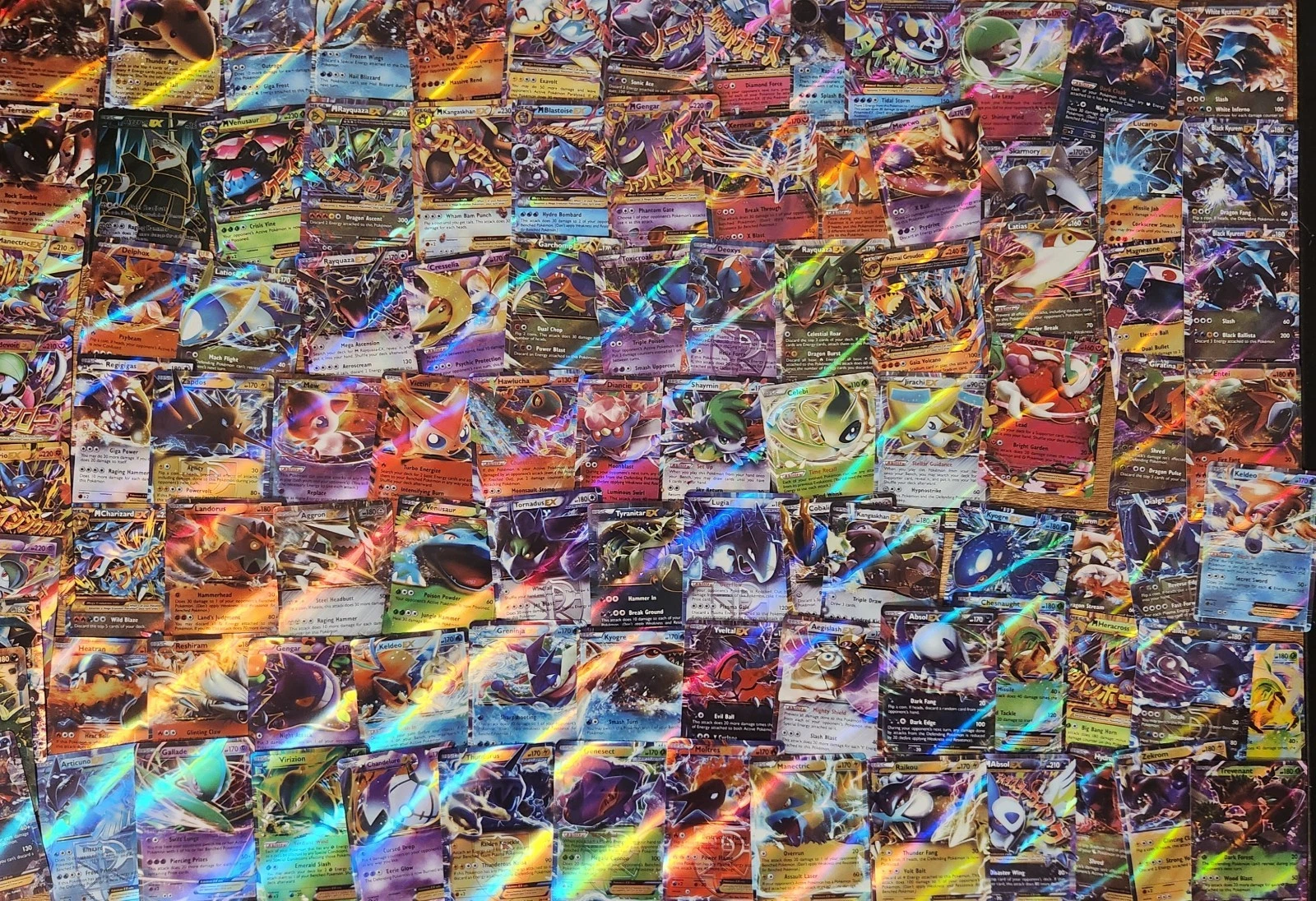
The whole card shines, picture included. That is not a reverse holo. Modern sets print full-art, illustration rare, gold and secret rare cards where the foil covers everything. Those are their own rarity tiers and are usually the most valuable cards in the set.
The card is a common or an energy but it shines. Perfectly normal. Reverse holos are printed for ordinary commons and uncommons too, so a shiny Caterpie is a reverse holo Caterpie, not a rare card. The rarity symbol in the bottom corner still tells you the card’s true rarity — a circle is common, a diamond uncommon, a star rare — and the reverse foil does not change it. Our guide to Pokémon card set symbols covers reading those marks.
What is a reverse holo, and when did they start?
A reverse holo is a normal card printed with the foil applied to the card body instead of the artwork. English reverse holos began with the Legendary Collection set, released on 24 May 2002. Since then every English booster pack has contained at least one reverse holo, and Scarlet & Violet era packs contain two.
That pack ratio is the whole reason reverse holos are usually cheap. A reverse holo is not a rarer card — it is the same card with different foil, and one or two arrive in every pack anyone opens. The exception is the sets from the era when the printing was new and print runs were small, which is covered further down.
Are holo Pokémon cards worth more than non-holo cards?
In vintage sets, yes, by a wide margin. In modern sets, hardly at all.
In 1999 Base Set, holo was the top rarity in the set. There was nothing above it, and the gap between a holo and the non-holo cards printed alongside it is enormous:
| Base Set card | Type | Ungraded, Aug 2026 |
|---|---|---|
| Charizard #4 | Holo rare | ~$400 |
| Blastoise #2 | Holo rare | ~$81 |
| Venusaur #15 | Holo rare | ~$70 |
| Ninetales #12 | Holo rare | ~$14 |
| Charmeleon #24 | Non-holo rare | ~$2.30 |
| Machoke #34 | Non-holo uncommon | ~$1.55 |
Even the mid-tier Base Set holo — Ninetales at roughly $14 — is worth several times the non-holo rare from the same pack. If your cards are 1999–2003 Wizards of the Coast prints, sorting holo from non-holo is the single most useful first pass you can make on the pile.
Modern sets are a different picture. A holo rare from a current set has two reverse holos in the same pack and an entire ladder of rarities above it — double rares, illustration rares, special illustration rares, hyper rares. Gengar #94 from Scarlet & Violet 151 sells ungraded for about $3.40. The foil is not doing much work there. In a modern set, what carries value is the rarity tier and the character, not whether the card shines.
If you are working through a modern collection, what bulk Pokémon cards are actually worth is the more realistic frame than sorting by shine.
What is a reverse holo worth?
For an ordinary common or uncommon, a reverse holo is worth slightly more than the plain version of the same card — usually a dollar or two rather than pennies. For the expensive holo rare of a set, the reverse holo normally sells for less than the regular holo.
Both patterns show up cleanly in XY Evolutions, a 2016 reprint set:
| Evolutions card | Plain version | Reverse holo |
|---|---|---|
| Charizard #11 (holo rare) | ~$86 | ~$70 |
| Gyarados | ~$7.81 | ~$9.15 |
| Raichu | ~$3.21 | ~$7.56 |
| Arcanine | ~$1.35 | ~$3.95 |
| Charmander | ~$0.97 | ~$2.80 |
| Caterpie | ~$0.26 | ~$0.87 |
Read the top row against the rest. For everything that is not the chase card, the reverse holo is the more collectable print, because the plain version is bulk that nobody is seeking out. For Charizard — the card people actually want — the regular holo wins, because collectors treat the regular holo as the real card and the reverse as the variant.
The same effect shows in Scarlet & Violet 151: Gengar #94 sells ungraded for about $3.40, while the reverse holo Gengar #94 sells for about $9.30.
So the honest answer to “is my reverse holo worth a lot” is: it is worth a bit more than the same card without the foil, and that is often still under $10.
The gap widens once the card is graded
The raw prices for Evolutions Charizard are fairly close. The graded prices are not:
| Evolutions Charizard #11 | Ungraded | PSA 9 | PSA 10 |
|---|---|---|---|
| Regular holo | ~$86 | ~$207 | ~$6,600 |
| Reverse holo | ~$70 | ~$175 | ~$2,140 |
A raw reverse holo Charizard is about 80% of the regular holo. In a PSA 10 it is about a third. Two things drive that. Collectors chasing a set registry want the regular holo, and reverse holo foil runs all the way to the card’s edges, so edge whitening and print lines that a matte border would hide are visible on a reverse holo. Fewer of them come back as 10s, and the ones that do serve a smaller pool of buyers.
That is worth knowing before you pay grading fees on one. Our post on whether grading is worth it walks through the break-even maths.
When is a reverse holo worth more than the holo?
Reverse holos from the earliest sets that had them are genuinely scarce, and there the ordinary rule inverts completely. The 2002 Legendary Collection set is the clearest case in English Pokémon:
| Legendary Collection card | Regular holo | Reverse holo |
|---|---|---|
| Charizard #3 | ~$88 | ~$2,240 |
| Gengar #11 | ~$91 | ~$1,210 |
| Dark Dragonite #5 | ~$82 | ~$471 |
| Venusaur #18 | ~$60 | ~$405 |
| Alakazam #1 | ~$30 | ~$329 |
| Gyarados #12 | ~$21 | ~$271 |
| Machamp #15 | ~$15 | ~$157 |
A reverse holo Charizard from Legendary Collection sells raw for roughly twenty-five times the regular holo of the same card. Every card in that table follows the same direction. The set had a short print run, the reverse holo print was brand new, and very few survived in collectable condition because in 2002 nobody thought the shiny-bordered version was the one to protect.
If you have a 2002 Legendary Collection card, check the border before you do anything else with it. That one detail is worth more than everything else about the card combined.
How to price your own holo or reverse holo
- Identify the set first. The set symbol and the card number tell you which of the patterns above applies. Holo versus reverse holo means nothing until you know the set.
- Search the exact variant. Search “Charizard 11/108 Evolutions reverse holo”, not “Charizard Evolutions”. The two variants have separate markets.
- Filter to sold listings only. Asking prices on eBay are wishes. Look at completed and sold listings and use the last 30 days.
- Match the condition, not just the card. A lightly played reverse holo with edge whitening is not the copy that set the high comp. Our Pokémon card condition guide covers what graders and buyers are actually looking at.
- Do not average in outliers. One odd sale is noise. The middle of the last several sales is the number.
The short version
- On a holo, the artwork shines and the card body is matte. On a reverse holo, the card body shines and the artwork is matte.
- Vintage holo cards carry a real premium. In Base Set, a holo rare is worth several times the non-holo cards printed with it.
- Modern holo rares do not carry much premium, because every pack contains reverse holos and several rarity tiers sit above the holo rare.
- A reverse holo is usually worth a little more than the plain card and less than the regular holo of the same set’s chase card.
- Legendary Collection (2002) is the big exception — its reverse holos sell for many times the regular holos.
- Reverse holos grade harder, because the foil runs to the edges where whitening shows.
Theo TCG buys Pokémon collections, so we sort through a lot of piles where the shiny cards were pulled to the front and the plain ones left at the back — and fairly often the value is the other way round.
If you would rather not work through variant by variant, send us photos of what you have. We will price it against recent sold comps, tell you which cards are the ones that matter, and say plainly if the answer is that the collection is worth keeping rather than selling.
Common questions
- How do I tell if a Pokémon card is holo or reverse holo?
- Tilt the card under a light and watch where the shine moves. On a regular holo the artwork window shines and the rest of the card is matte cardstock. On a reverse holo the artwork window is matte and everything around it — border, name bar, text box — shines. If the whole card including the picture is foil, it is a modern special rarity, not a reverse holo.
- Is a reverse holo worth more than a holo?
- Usually not, but there are two clear exceptions. For an ordinary common or uncommon, the reverse holo is worth a little more than the plain version because the plain version is bulk. For the chase holo rare of a modern set, the reverse holo normally trails the regular holo. In the 2002 Legendary Collection set, reverse holos are so scarce that they sell for many times the regular holo.
- Are all holo Pokémon cards valuable?
- No. A holo card from a 1999 Wizards of the Coast set carries a real premium, because holo was the top rarity tier in those sets and there was nothing above it. A holo rare from a current set sits alongside two reverse holos in every pack plus a stack of higher rarities above it, so most modern holo rares sell for a few dollars.
- Should I get a reverse holo graded?
- Usually only if it is from an early reverse holo set or a card with a strong raw price already. A reverse holo has foil running to the edges of the card, so edge whitening and print lines show up more easily than on a regular holo, and the PSA 10 prices for reverse holos of the same card are often well below the regular holo’s.