Fake PSA and CGC Slabs: How to Check a Cert
Every graded slab carries a number you can look up on the grader's own site before you pay. Here are the three lookup pages, what each one actually returns, and what it means when the database describes a different card to the one in your hands.
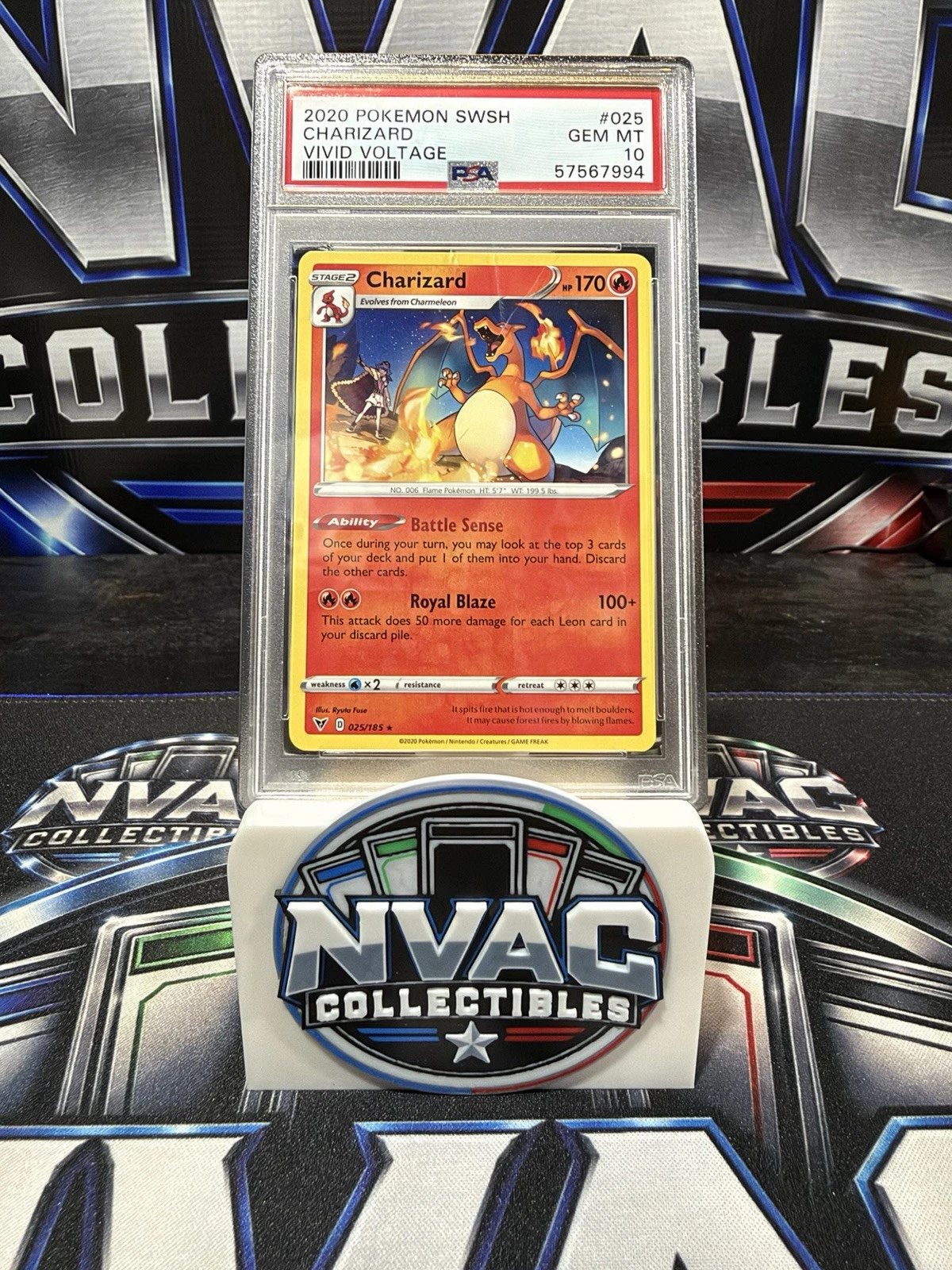
The single most useful habit when buying a graded card is boring: before any money moves, type the certification number from the label into the grading company’s own lookup page and read what comes back. What you want is not a green tick — it is agreement. The database has to describe the exact card in the photo or in your hand: same year, same set, same card number, same grade.
When it does not, you have found something, and the rest of this post is about what.
The three lookups
| Grader | Lookup page | What you enter | What comes back |
|---|---|---|---|
| PSA | psacard.com/cert | Cert number | Text record: grade, year, brand, subject, card number, category, variety |
| CGC Cards | cgccards.com/certlookup | Cert number, or scan the label’s QR code | Description, grade, and CGC’s own high-resolution images of the holdered card |
| Beckett (BGS/BVG/BCCG) | beckett.com/grading/card-lookup | Cert number | The grading information recorded against that certificate |
Two notes. Always go to the grader directly — plenty of third-party lookup mirrors are honest, but a counterfeiter’s job gets much easier if you accept a screenshot instead of loading the page yourself. And these are three different tools: CGC’s returns pictures, PSA’s does not, and that changes how you verify. None needs an account.
PSA: read the text fields, not the number
PSA’s page is at psacard.com/cert, headed “Cert Verification”. Its instruction is one line: “Verify the validity of PSA & PSA/DNA certification numbers. Search certs for cards, autographs, tickets, Comics, Video Games and more.”
Enter the number from the label and you get back an item information block. On the certs we pulled up in August 2026 the fields were: Cert Number, Item Grade, Reverse Cert/Barcode, Year, Brand/Title, Subject, Card Number, Category and Variety/Pedigree. Some records also carry a Label Type field. A sales history section sits underneath — useful for pricing, not part of the verification.
What you will not get is a photograph of the card taken by PSA. PSA runs a high-resolution imaging service — SecureScan, free on Express-level orders and above — but that is tied to service level, not a universal record of every slab. So for PSA, verification is a reading exercise: nine fields, and you compare all nine.
You can link straight to a record — psacard.com/cert/ followed by the number — which is
handy for asking a seller to confirm it is their card.
PSA’s current LightHouse label carries a QR code for instant access to Cert Verification, alongside a logo with an on/off illumination effect, a fugitive-ink pattern intended to prevent label washing, and a UV logo pattern on the back. Scanning that code is the fastest route in — though a QR code is just a link, so read the domain it opens.
CGC: the images are the whole point
CGC’s card lookup is at cgccards.com/certlookup. CGC’s cross-brand verify page frames it plainly: “Enter a collectible’s CGC certification number to confirm its description and grade in the CGC database.”
The difference is what comes back. CGC images every card in high resolution after it is sealed in the holder, and the lookup lets you “view images of the holdered card taken by CGC Cards”. So you are not comparing a text description against a card — you are comparing CGC’s photograph of that exact slab against the slab in front of you. Centering, surface print pattern, the exact crop of the artwork. Much harder to fake than a matching year and grade.
On the back of a CGC label there is a QR code that goes straight to that card’s record. CGC also lists microprinting, UV ink and holographic foil among its label features, and describes the case as ultrasonically welded to resist impacts and tampering.
Buying a CGC slab from a photo? Ask for a clear shot of the front of the holder, pull up the cert, and compare the two images yourself. It is the strongest remote check available on any of the three graders.
Beckett: BGS is not BAS
Beckett’s graded card lookup lives at beckett.com/grading/card-lookup, covering BGS, BVG and BCCG. The page’s instruction is “Verify the validity of Beckett certificates by entering the cert number”, and Beckett encourages sellers to link to it: “You can link directly to this page from your auction ads of eBay and other auction sites.”
A good norm, and worth adopting as a buyer’s request. A seller who will not link the cert is telling you something.
One trap: Beckett runs a separate tool for Beckett Authentication Services at
beckett-authentication.com/verify-certificate, and that one is for autographs and
memorabilia, not graded cards. Its numbers are alphanumeric, and it warns that “there is
no space between the letter and the numbering”. Put a BGS card number into the BAS tool
and you will get nothing back and scare yourself for no reason.
What a mismatch actually means
This is the section that matters. Four outcomes, roughly in order of frequency.

1. The number returns nothing. Often this is your own typo, the wrong tool (BAS versus BGS above), or a very recent submission still propagating. Retype it carefully once. If it still returns nothing, treat the slab as unverified — not proven fake, but not proven anything, and an unverified slab does not earn a graded premium.
2. The number returns a completely different card. A 1998 baseball card, a different category entirely. This is the classic signature of a counterfeit insert built around a real cert number taken from a public database or an old listing. There is no innocent version of this. Walk away.
3. The number returns the right card at a different grade. Almost as bad, and more dangerous, because the card in the holder may be genuine. A real 7 in a holder relabelled as a 9 is a much easier sell than a fake card, and the price gap between adjacent grades on a good Pokémon card is enormous. Compare the grade character by character.
4. Everything matches except one small field. Label Type, Reverse Cert/Barcode, Variety/Pedigree. Do not shrug these off. A record naming one label generation while the slab in your hand is a different generation is a real inconsistency. PSA’s route for a genuine clerical error is a Label Correction Request through its Customer Request Center — which tells you PSA treats label data as something meant to be right, not approximately right.
A match is not a clean bill of health
PSA says this on its own verification page, and it is the thing buyers most often get wrong: “Though uncommon, criminals do attempt to counterfeit PSA grading inserts using actual certification numbers derived from public sources.”
Read that again. The counterfeit is designed to pass the lookup. Population reports, completed listings and set registries all publish cert numbers, so a working number is cheap to obtain. The lookup is a filter, not a verdict.
Which is why it pairs with a physical check. PSA’s buyer’s guide is direct that its holders are tamper-evident, not tamper-proof, and points at three things you can check by hand: “frosting” or cloudiness along the sealed edges where a case has been opened and reglued; minor fractures in the plastic; and flex, since a genuine holder is “very firm, virtually inflexible”. It also suggests holding the slab up to a strong light and trying to read through the label from behind. If a second printed layer has been laid over the original insert, you will not be able to.
For scale: PSA’s 2025 fraud report headline is “$200M+ in Projected Fraudulent Collectibles Intercepted”, with counterfeits described as “more frequent, more sophisticated, and harder to spot than ever”. That is a grader describing its own catch rate, so treat it as directional rather than a market estimate.
Build the check into how you buy
Do the lookup before you pay. Ask for a photo of the label at a resolution where you can read the cert number, then look it up yourself. Any seller acting in good faith will find this normal; Beckett tells its own sellers to link the cert in the listing.
On eBay, two policies do work in the background. Trading cards listed or sold at $200 or more, excluding tax and shipping, run through eBay’s Authenticity Guarantee, and for graded cards the authenticator inspects “the sealed plastic holder for signs of tampering”; accepted graders include PSA, SGC, CGC Trading Cards, CSG and BGS. But eBay also states that “Authenticity Guarantee for trading cards does not include grading services” — nobody is re-checking whether the 9 should have been a 9.
Below that threshold you are on the Money Back Guarantee, and trading cards get a tight window. The general rule is a return request within 30 calendar days of delivery or the seller’s stated window, whichever is longer — but for trading cards specifically, where the seller offers no returns, it is 3 calendar days after the estimated or actual delivery date. Do the cert lookup the day the parcel lands, not the weekend after.
If you think you already own one
Do not crack the case. It is tempting — you want to know what is really in there — but the sealed slab with its label intact is the only evidence you have, for a marketplace case, a payment dispute, or the grader.
Photograph the slab front and back, screenshot the lookup result showing the mismatch, and keep the listing and payment record. Then contact the grading company; PSA invites this, saying that if you have “any concern about an alleged PSA-certified item prior to purchase”, you are welcome to contact them and arrange for it to be reviewed. In parallel, open the not-as-described case inside whichever window applies — those clocks do not pause while you investigate.
And tell the person you bought it from. Plenty of fake slabs are resold by people who were themselves taken in years earlier, and that conversation is often how the chain gets traced.
The short version
- Look the cert up on the grader’s own site —
psacard.com/cert,cgccards.com/certlookup,beckett.com/grading/card-lookup— before you pay. - Compare every field, not just the grade. Year, set, card number, variety.
- With CGC, compare its photograph of the holdered card against the slab.
- A working cert number proves nothing on its own. PSA says outright that counterfeit inserts are built around real numbers taken from public sources.
- On a mismatch: do not pay, do not crack the case, screenshot everything, open the dispute inside the window.
If this feels like a lot of homework for one card, our comparison of PSA, CGC and Beckett is worth reading before you buy graded at all, as is our guide to fake raw cards — most counterfeits never reach a holder.
If you have a pile of slabs and would rather someone else did the cert checks, send us photos — clear shots of the labels are enough to start. We’ll price the collection against recent sold comps, and tell you plainly if something in it doesn’t verify, whether or not you end up selling to us.
Common questions
- Can a fake slab have a real certification number?
- Yes, and this is the part most buyers miss. PSA’s own cert verification page warns that “criminals do attempt to counterfeit PSA grading inserts using actual certification numbers derived from public sources.” A number that returns a valid record is necessary but not sufficient — the record has to describe the card you are actually holding.
- Does the PSA cert lookup show a photo of the card?
- On the certs we checked in August 2026, no. PSA’s cert page returns text fields — cert number, grade, year, brand, subject, card number, category, variety — plus recent sales listings, but not a PSA-taken image of the encapsulated card. CGC is different: CGC images every card after encapsulation and shows those images in its cert lookup, which makes a CGC slab easier to check from a photo.
- What do I do if the cert number returns a different card?
- Stop the transaction. Do not send money, and if you have already paid, do not open the holder — the sealed slab is your evidence. Screenshot the lookup result and the listing, then open a not-as-described case with the marketplace or your card issuer. A cert number that resolves to a different card is not a clerical slip you can negotiate around.
- Are graded cards on eBay covered if the slab turns out to be fake?
- Trading cards listed or sold for $200 or more, excluding tax and shipping, go through eBay’s Authenticity Guarantee, and for graded cards the authenticator inspects the sealed holder for signs of tampering. Below that threshold you are relying on the Money Back Guarantee instead, and for trading cards specifically, if the seller offers no returns you have only three calendar days from delivery to open a return request.