How to Price a Pokémon Card in Under a Minute
Search the card on eBay, tick the Sold items filter, and read the middle of the results. That takes about forty seconds and beats every price guide — here is why, and where the guides quietly mislead you.
Short version: type the card’s name, set and number into eBay, tick the Sold items filter, and read the middle of the results. That is the price. It takes about forty seconds, it costs nothing, and it is more honest than any price guide, because it is a list of things people actually paid rather than a list of things people are hoping to be paid.
Everything below is the reasoning behind that sentence, and the three places where the convenient shortcut — looking up a “book value” — quietly leads people wrong.
The forty-second method
- Identify the card properly first: name, set, card number, and any printing marks. This is the step people skip, and it is the step that matters most.
- Search that on eBay.
- In the left-hand filter column, scroll to the Show only section and tick Sold items. “Completed items” sits directly above it and includes listings that ended without selling — that is a different, much less useful list.
- Ignore the highest result and the lowest result. Look at where the cluster sits.
- Sanity-check the condition of the copies in that cluster against yours.
If you would rather skip the clicking, the filter is just two URL parameters. This search is Base Set Charizard, sold listings only — swap the search term and the filter stays applied.
Why active listings tell you nothing
An active listing is a wish. Anyone can list a common card for four figures and leave it up forever; nothing stops them, and nothing about that listing constitutes evidence.
This sounds obvious written down. It is still the single most common reason someone arrives at a wildly wrong idea of what their collection is worth — they searched, saw the top result, and did not notice they were reading an asking price. Ticking one box removes the entire problem.
What eBay’s sold filter actually shows you
Two things worth knowing about that filter.
It is a rolling window, not an archive. eBay’s own developer documentation for its sales-history API states that “the sales history range is up to 90 days in the past”, and the public sold filter behaves the same way. eBay’s buyer-facing help pages do not publish a figure, so treat ninety days as the working assumption rather than a promise. For a card that sells several times a week that window is plenty. For something scarce it can return three results or none, and three results is not a market.
A longer history exists and it is free. eBay’s Product research tool, in the Seller Hub Research tab, gives access to the last three years of eBay sales data, and eBay’s help pages say all sellers can use it. If you have a card with thin recent volume, that is where to go next rather than to a guide.
One more habit worth building: the sold results mix auction endings, fixed-price sales and accepted offers together. An auction that ended at 2am on a Tuesday and a Buy It Now that sat for a month are both “sold”, and they are not the same signal. The Buying format filter in that same sidebar lets you separate them.
What TCGplayer’s “market price” actually is
TCGplayer’s market price is a genuinely good number that is routinely read as something it isn’t.
In TCGplayer’s own words, it is “the average price of recent sales through TCGplayer for a specific product in a specific condition”. Their seller documentation puts the window more precisely: market is “an aggregate of sold listings for the previous week”, and prices update four times a day.
So three constraints are baked in. It is TCGplayer only — eBay sales, card shop counters and Facebook groups are invisible to it. It is the previous week, so it moves fast and can be jumpy on a card that only sold twice. And it is per condition and per product, which is its real strength: unlike a generic “ungraded” figure, a Near Mint entry is not being averaged with a Damaged one.
The caveat that costs people money is volume. TCGplayer itself flags this — the site publishes a market price volatility indicator built from sales volume and price standard deviation over a thirty-day period. If that indicator is shouting, the market price is a weak average, not a verdict. On a card with a handful of weekly sales, “market price” can be one person’s Tuesday.
Three ways price guides mislead people
1. They average across printings that are not the same card
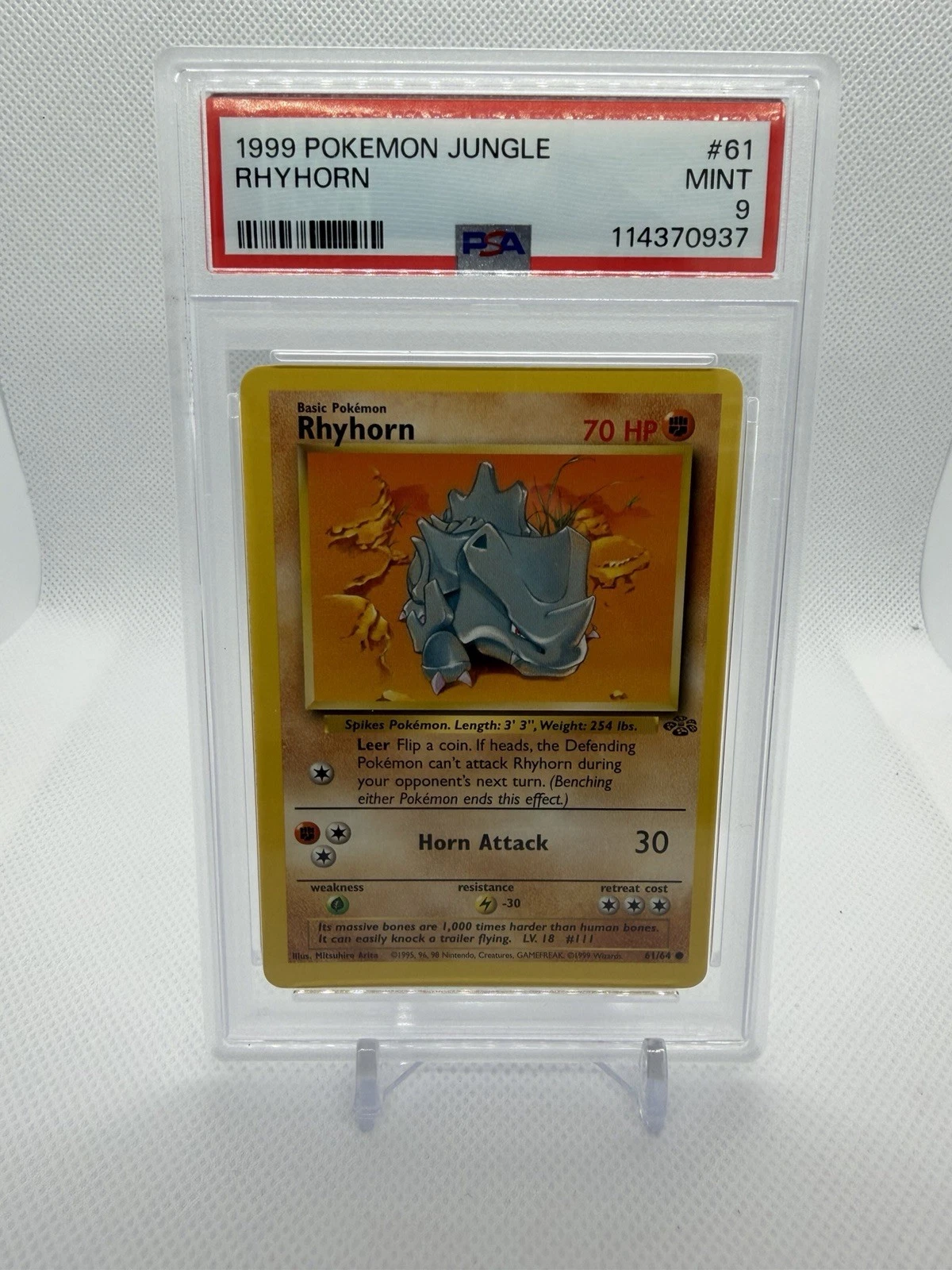
This is the big one, and a real example makes it concrete. As of 26 August 2026, PriceCharting’s Base Set Charizard entry showed an ungraded price of ~$437. The individual recent ungraded sales feeding that number ran from $189.50 on 24 August to $948.18 on 18 August.
That is not noise. Base Set Charizard exists as 1st Edition, Shadowless and Unlimited printings, and PriceCharting’s page does not split them — the pricing table shows one “ungraded” figure covering all of it. So the average is a real average of real sales, and it describes no actual card. If you own the cheap printing you are being flattered; if you own the expensive one you are being robbed. Our Shadowless vs Unlimited guide covers how to tell which you have in about ten seconds.
2. They sort condition by reading listing titles
PriceCharting’s published methodology is upfront about this: graded and ungraded tiers, and the individual grade columns, are assigned by looking for grading-service indicators in listing titles and descriptions. That works well at scale and it fails exactly where you would expect — a mislabelled listing, a title that says “PSA 10” about a different card in a lot, a raw card described as “mint” by an optimistic seller.
It also means the ungraded tier is a condition-blind bucket. A card with soft corners and a card that has never left its sleeve both land in it. If your copy is not clean, read our condition guide before you believe the middle of that range applies to you.
3. The number is gross, and you are thinking about net
Whatever figure you read, it is a sale price, not a payout. As of August 2026:
| Where you sell | Platform fee | Also comes out |
|---|---|---|
| eBay (Collectible Card Games, Non-Sport Trading Cards) | 13.25% up to $7,500 per item, then 2.35% above that | Per-order fee of $0.30 on orders of $10 or less, $0.40 above |
| TCGplayer | 10.75% commission, capped at $75 per product | Payment processing of 2.5% + $0.30 |
And on top of either: postage, a bubble mailer, sleeves, a top loader, tracking, and the time it takes to photograph and list a card. Guides do not model any of that, and neither does the number in your head.
Two of those guides also treat shipping differently from each other. PriceCharting states plainly that the prices it shows do not include shipping costs or other transaction costs, while on TCGplayer shipping sits as a separate fee alongside the item price. If you are comparing figures across sites, you are sometimes comparing slightly different things.
When the guides disagree, that is information
On that same Base Set Charizard page on 26 August 2026, PriceCharting’s own ungraded figure was ~$437 while the TCGplayer price shown alongside it was ~$856 — nearly double, for nominally the same card, on the same day.
Neither is lying. They are sampling different populations: one is a blended average of eBay sales across every printing and every condition, the other is a TCGplayer retail figure for a specific product and condition. When you see a gap like that, it is almost always telling you that the “one card” you are pricing is really several cards wearing the same name.
That is the moment to stop and identify the card properly rather than pick whichever number you prefer.
When one minute isn’t enough
The fast method works for a single card you can identify. It stops working when:
- The card is scarce. Too few sold comps to form a cluster. Widen the window with Product research, and accept a range rather than a price.
- You have a whole box. Pricing a collection card by card is a job, not a task. Start with what a collection is actually worth and how bulk gets valued instead.
- Grading is on the table. A raw comp and a graded comp are two different markets, and the gap between them is not free money — our take on whether grading is worth it goes through the maths honestly.
The short version
- Price from sold listings. Never active ones.
- eBay’s sold filter is under Show only in the left sidebar, or
&LH_Sold=1&LH_Complete=1on the URL. - Assume roughly a ninety-day window; use Seller Hub Product research for a longer history.
- TCGplayer market price is TCGplayer sales, previous week, one condition. Good number, narrow scope.
- Price guides average across printings and read condition off listing titles. Identify your exact card before you trust the figure.
- Subtract fees and postage before you decide what you have.
If you would rather not do this forty times over for a box you inherited, send us photos and we will price it against recent sold comps and put a written offer in front of you. You are welcome to run the same searches afterwards and check our working — we would rather you did.
Common questions
- How do I see what a Pokémon card actually sold for on eBay?
- Search the card, then scroll the left-hand filter column to the “Show only” section and tick “Sold items”. You can also add
&LH_Sold=1&LH_Complete=1to the end of a search URL and get the same result. The results that come back are completed sales, not asking prices. - Why is the TCGplayer price different from the eBay sold price?
- They are measuring different things. TCGplayer’s market price is an average of recent sales through TCGplayer’s own marketplace for one product in one condition, aggregated over the previous week. eBay sold comps are a raw list of individual eBay transactions over roughly the last ninety days, graded and raw mixed together. Neither is wrong; they are different populations.
- Is PriceCharting accurate for Pokémon cards?
- It is accurate about what it measures, which is not always what you assume. PriceCharting builds its prices from completed eBay and marketplace sales and sorts graded from ungraded by reading grading keywords in listing titles and descriptions. On a card with several printings under one entry, the single “ungraded” figure is an average across printings that sell for very different amounts.
- Do I need to pay for a price guide subscription?
- For pricing your own cards, almost certainly not. eBay’s sold filter is free and is the underlying data most guides are built from. If you want a longer history, eBay’s own Product research tool in Seller Hub covers the last three years of eBay sales data and is available to all sellers.