Which Years of Pokémon Cards Are Worth Money?
1999 to 2003 carries most of the money. 2003 to 2016 is the flat stretch where most collections sit. Here is the era-by-era map, with prices and dating tips.
Short version: 1999 to 2003 is where the money is, and 2003 to 2016 is where it isn’t. If your cards came out of a box in a cupboard and they are from the Diamond & Pearl, Platinum, HeartGold & SoulSilver or Black & White years, that is the flattest part of the whole timeline, and it is worth knowing that before you spend a weekend sorting them.
That is not a comment on your collection. It is a comment on print runs and on who is buying. Below is the era-by-era map, what each era actually sells for, and how to work out which era your cards belong to.
Which years of Pokémon cards are worth money?
“Typical holo rare, raw” below is the range an ordinary, non-chase holo from that era sells for ungraded — the cards most people actually have, rather than the headline cards.
| Era | Years | Representative sets | Typical holo rare, raw | What actually drives value |
|---|---|---|---|---|
| Wizards vintage | 1999–2000 | Base Set, Jungle, Fossil, Team Rocket, Gym | ~$3–60 | 1st Edition stamp, Shadowless printing, PSA 10 grades |
| Neo and e-Card | 2000–2003 | Neo Genesis, Neo Destiny, Expedition, Aquapolis, Skyridge | ~$10–435 | Small late print runs, Shining and Crystal chase cards |
| EX series | 2003–2007 | EX Ruby & Sapphire, EX Deoxys, EX Dragon Frontiers | ~$10–45 | Gold Star cards and ex ultra rares only |
| Diamond & Pearl to HGSS | 2007–2011 | Diamond & Pearl, Stormfront, Platinum, HeartGold & SoulSilver | ~$3–45 | Almost nothing raw; LV.X and LEGEND cards in PSA 10 |
| Black & White to XY | 2011–2016 | Black & White, Plasma Storm, XY, Evolutions | ~$1–8, Evolutions higher | Full arts and secret rares; Evolutions is the outlier |
| Sun & Moon | 2017–2019 | Sun & Moon, Cosmic Eclipse, Hidden Fates | ~$2–5 | Rainbow rares and the Hidden Fates Shiny Vault |
| Sword & Shield | 2020–2023 | Vivid Voltage, Evolving Skies, Crown Zenith | ~$1–35 | Alternate art secret rares, and only those |
| Scarlet & Violet | 2023–2026 | Scarlet & Violet 151, Prismatic Evolutions | ~$1–20 | Special Illustration Rares of popular Pokémon |
The peak is at the start and the trough is in the middle. And in every era after 2003, value sits in a handful of cards per set rather than spread across the holos.
How do I work out what year my Pokémon card is from?
Read the copyright line along the very bottom edge of the card. It lists a run of years, and the last year in that run is the year that print run was made. That single line settles most questions in about five seconds. Four more checks, in the order they are useful:
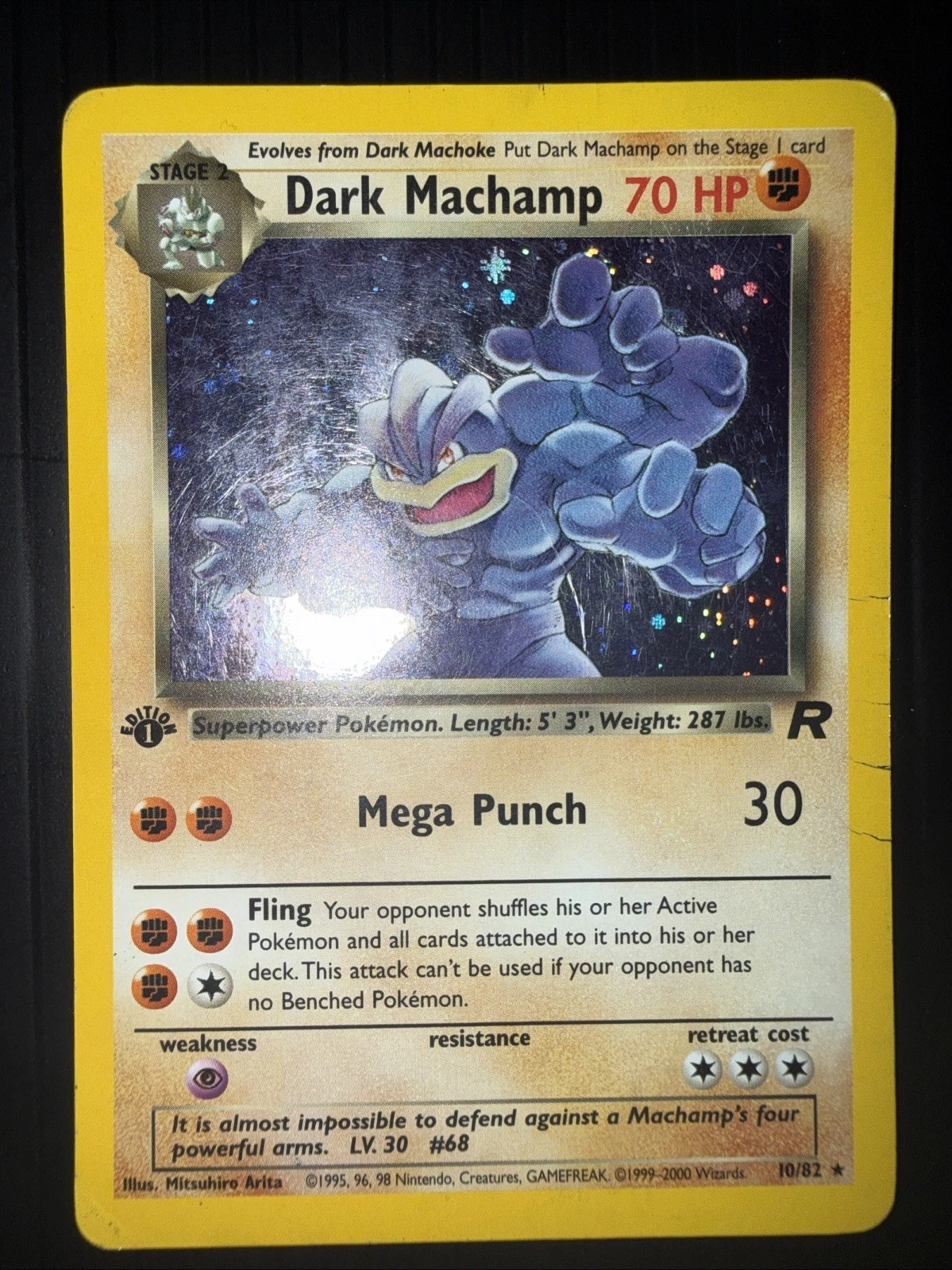
- Does the copyright line say Wizards of the Coast? If so, the card was printed between 1999 and 2003. Wizards’ license to print English Pokémon cards ended on 30 September 2003 — Skyridge was its last set, and EX Ruby & Sapphire was the first Nintendo one.
- Find the set symbol. On Wizards-era cards it sits on the right side between the artwork and the attack text; on modern cards it sits at the bottom right by the card number. Base Set is the only English set with no symbol at all. Our guide to Pokémon set symbols has the full chart.
- Read the card number. 4/102 means card 4 of a 102-card set, and the set size alone often identifies the set. If the first number is higher than the second — 205/198, say — you have a secret rare, which only exists from the mid-2000s onwards.
- Look for a letter in a small black box beside the set symbol. That is a regulation mark, and it only appears on cards from 2021 onwards: D covers 2021–23, E covers 2023–24, F covers 2024–25, G covers 2025–26, and H starts in 2026.
1999–2000: the Wizards years, where the money is
The 1999 and 2000 Wizards of the Coast sets carry more value per card than any other English era, and it is not close. A 1st Edition Base Set Charizard trades around $6,500 raw and around $343,000 in a PSA 10 as of August 2026. Even the Unlimited printing — the common version, the one most people have — sits around $400 raw and $20,000 in a PSA 10. See our Base Set Charizard breakdown for the three printings.
The rest of the era is more modest but still real. Ordinary Jungle holo rares run roughly $10 to $60 raw, and a 1st Edition Jungle Snorlax trades near $219 raw against roughly $33,600 in a PSA 10. Team Rocket holos run roughly $3 to $35 raw, with the Dark Charizard near $238. The two things collectors pay the biggest premium for — a 1st Edition stamp and the Shadowless print variant — only exist in this era and nowhere after it.
2000–2003: Neo and the e-Card sets
The last three Wizards sets — Expedition, Aquapolis and Skyridge — are the quiet money on the timeline, and most people who own them do not know it. Skyridge’s Crystal Charizard trades around $5,900 raw and roughly $90,700 in a PSA 10, and even ordinary Skyridge holo rares sit between about $100 and $435 raw. Aquapolis is close behind: its Crystal Lugia is near $2,940 raw and $79,300 in a PSA 10, with ordinary holos from about $12 to $166. Those are floors well above Base Set holos, which is the market’s verdict on how few of these cards are still around.
The Neo sets sit between the two: Neo Destiny’s Shining Charizard trades near $1,400 raw and around $21,350 in a PSA 10, while ordinary Neo Destiny holos run roughly $10 to $70. If any card in your shoebox carries the Skyridge or Aquapolis symbol, sort it out first.
2003–2010: the dead zone, and why it exists
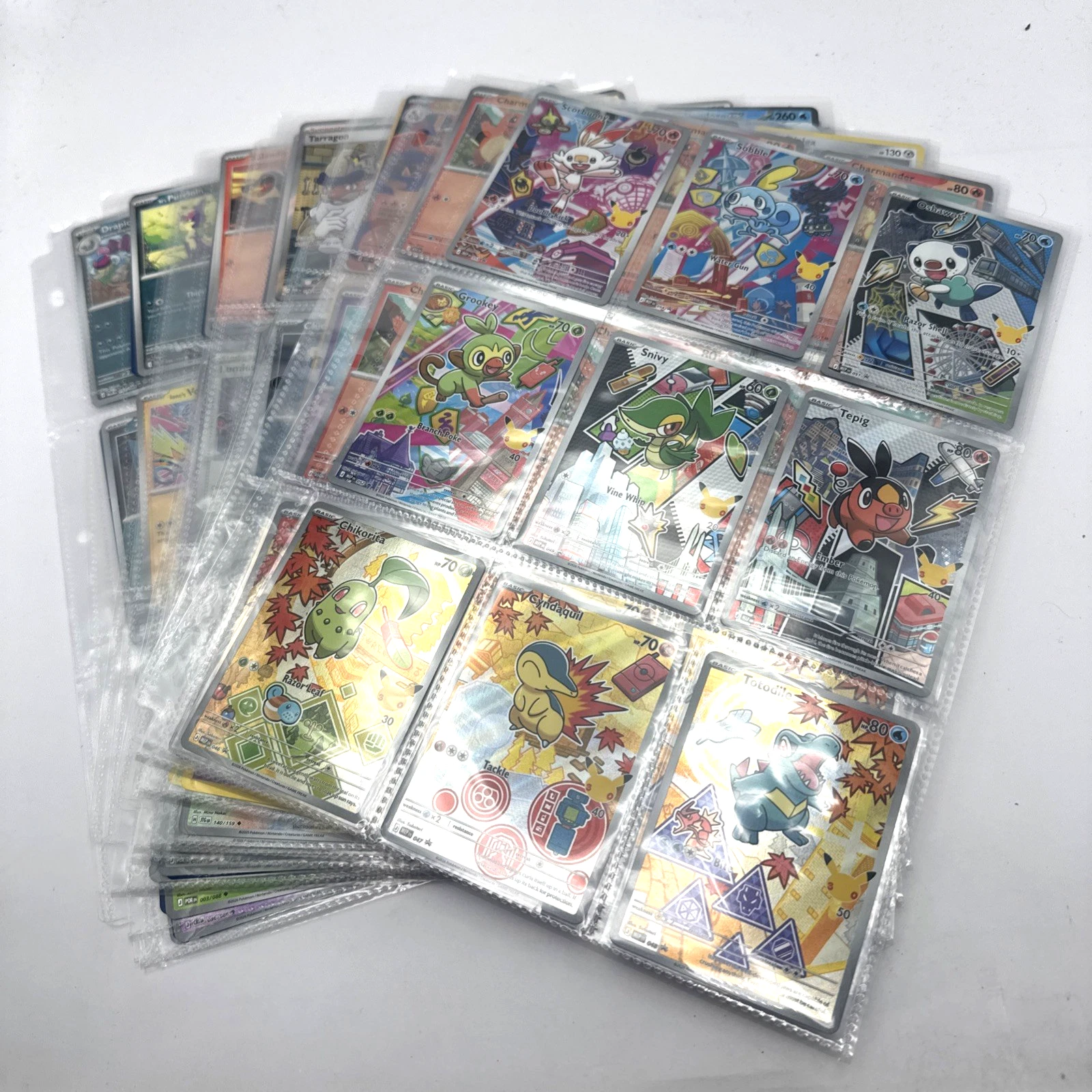
Pokémon cards printed between 2003 and 2010 are the least valuable English cards ever made, and this is the era most home collections are actually built from. An ordinary holo rare from the 2007 Diamond & Pearl set trades between roughly $3.60 and $14 raw. Platinum holos run about $2 to $25. HeartGold & SoulSilver holos run about $4 to $45. Those are not outliers — that is the middle of the distribution.
Here is the honest version of why, because “your cards aren’t worth much” without a reason is not useful.
Print runs got much bigger, and the cards survived. By 2003 the game had settled into a schedule of several large sets a year, and the sets themselves were bigger. More cards were made, and more of them went into binders rather than bicycle spokes. Supply is enormous and intact.
The nostalgia cohort has not arrived yet. Vintage prices are driven by adults buying back the cards they had as children, and the people paying $400 for an Unlimited Charizard are mostly buying a 1999 memory. The children who opened EX Deoxys packs in 2005 are only now reaching the age where that starts to happen. That can change, and to some extent it already has for the EX-era chase cards.
The chase cards of that era were bad at surviving. LV.X cards from 2007 to 2009 and LEGEND cards from 2010 used foil stock that scuffed easily and were played with hard. That is why raw prices look unremarkable while graded prices look extraordinary: a Diamond & Pearl Empoleon LV.X trades around $23 raw but roughly $22,570 in a PSA 10. That PSA 10 price is not a reward for scarcity. It is a reward for a copy surviving.
The exceptions in this era worth pulling out
Three things from 2003–2010 are genuinely worth money:
- Gold Star cards from the EX series — a small gold star beside the Pokémon’s name. The Charizard Gold Star from 2006’s EX Dragon Frontiers trades around $3,590 raw and roughly $195,200 in a PSA 10; the Mew Gold Star from the same set is near $1,940 raw.
- ex ultra rares from 2003–2007. The EX Ruby & Sapphire Mewtwo EX trades near $225 raw; Dragon Frontiers Rayquaza EX near $212.
- Anything from this era in genuinely mint condition. Graded premiums here are the largest on the timeline, precisely because so few clean copies exist. Whether that makes grading worthwhile is a separate maths problem — see what grading actually costs and when it pays.
One more thing that surprises people: sealed product from the dead zone is not dead at all. An unopened Platinum booster box tracks around $12,390 and an EX Ruby & Sapphire box around $16,246. The singles are cheap because everyone opened their packs; the sealed boxes are expensive for exactly the same reason.
2011–2019: still flat, with two outliers
The 2011 to 2016 stretch is actually the low point for raw holo rares, slightly below the 2003–2010 era. Ordinary Black & White holo rares from 2011 sell for roughly $1.50 to $3, and XY-era holos from 2014 run from under $1 to about $8. The dead zone does not end in 2010; it flattens out and keeps going.
Two outliers. XY—Evolutions (2016) reprinted Base Set artwork, and its Charizard trades near $86 raw and roughly $6,630 in a PSA 10. Hidden Fates (2019) has the Shiny Vault subset, where the Charizard GX sits near $635 raw; ordinary Hidden Fates holos are $2 to $5. If most of your collection lands in these years, what bulk Pokémon cards are actually worth is the practical next read.
2020–2026: the modern era
Modern cards are worth money only at the very top rarity tiers, and the gap between those and everything else is the widest it has ever been. The 2021 Evolving Skies Umbreon VMAX alternate art trades around $2,025 raw and roughly $4,250 in a PSA 10; the Rayquaza VMAX alternate art from the same set is near $1,096. Ordinary holo rares from that set run $10 to $35, and the commons are under a dollar. Scarlet & Violet follows the same shape: the Scarlet & Violet 151 Charizard ex Special Illustration Rare trades near $354 raw and the 2025 Prismatic Evolutions Umbreon ex near $1,362, while ordinary Prismatic Evolutions holos are $1 to $3.
The reason is worth stating plainly: The Pokémon Company printed 10 billion cards between March 2025 and March 2026, taking the all-time total past 85 billion. Nothing made at that volume becomes scarce. Alternate arts hold value because they are pulled at a tiny rate from that print run, not because the print run is small.
What if my whole collection is from the dead zone?
Then it is probably worth less than you hoped and more than nothing, and the right move is to price it as a lot rather than card by card. Sorting 3,000 Platinum-era commons one at a time costs more in time than the cards are worth. What is worth doing:
- Pull anything with a gold star, an LV.X, a LEGEND, or a full-art treatment.
- Pull anything genuinely flawless — sharp corners, centered artwork, no surface scuffing.
- Check those against sold listings , never active asking prices.
- Treat the rest as bulk and weigh it rather than count it.
If you end up with a box of nice-looking 2008 cards and nothing else, that is a genuinely common outcome, and no amount of sorting harder changes it.
The short version
- 1999–2003 carries most of the money. Check for a 1st Edition stamp, Shadowless printing, and the Skyridge and Aquapolis set symbols.
- 2003–2016 is the flat stretch, and most home collections sit in it. Ordinary holos from those years sell for single-digit dollars raw, with Evolutions and Hidden Fates as the named exceptions.
- 2020 onwards puts almost all the value in alternate arts and Special Illustration Rares.
- Date the card from the copyright line first, then the set symbol, then the number.
- Sealed product does not follow the singles. That holds in every era.
Theo TCG buys Pokémon collections, so we see a lot of dead-zone boxes and are used to giving people the real answer about them. If you would rather not sort it yourself, send us photos of what you have — we price against recent sold comps, and we will tell you honestly if the answer is “this is mostly bulk”, or if one card in the pile is worth more than the rest put together.
Common questions
- What year of Pokémon cards is worth the most money?
- 1999 is the single most valuable year for English Pokémon cards, because that is when Base Set, Jungle and Fossil were printed and when the 1st Edition and Shadowless printings existed. 2002 and 2003 are the runner-up years: the last Wizards of the Coast sets, Aquapolis and Skyridge, are far scarcer today than the 1999 sets, and their chase cards sell for thousands raw — the Skyridge Crystal Charizard is around $5,900 ungraded as of August 2026.
- Are Pokémon cards from the 2000s worth anything?
- Pokémon cards printed between about 2003 and 2010 are the least valuable English cards ever made, with most holo rares from that stretch selling for single-digit dollars raw as of August 2026. The exceptions are real but narrow: Gold Star cards from the EX series, LV.X and LEGEND cards, and almost anything from that era in a PSA 10 slab. A 2007 Diamond & Pearl holo rare is worth a few dollars raw; the same card in a PSA 10 can be worth thousands.
- How do I find out what year my Pokémon card is from?
- Read the copyright line along the very bottom edge of the card — the last year listed is the year of that print run. If the copyright line names Wizards of the Coast, the card was printed between 1999 and 2003, because Wizards’ license to print English Pokémon cards ended on 30 September 2003. If there is a single letter in a black box beside the set symbol, the card is from 2021 or later.
- Are Pokémon cards from 2010 to 2015 worth money?
- Most Pokémon cards printed between 2010 and 2015 are worth very little raw. Ordinary holo rares from the 2011 Black & White set sell for roughly $1.50 to $3 as of August 2026, which is the lowest point on the whole timeline. Sealed product from those years is a different story — an unopened Black & White booster box tracks at around $10,200, because almost all of it was opened at the time.