PSA vs CGC vs Beckett for Pokémon: Which Should You Use?
PSA slabs sell for far more than CGC or Beckett on the same card. Here are the current fees, the verified price gap, and the cases where CGC still wins.
If you are grading a Pokémon card in order to sell it, use PSA. The premium is not subtle and it is not a matter of taste — it shows up in completed sales, on the same card, in the same nominal grade.
That is the short answer. The longer one is that CGC is materially cheaper and faster, Beckett tells you more about your card than either, and there are real cases where one of those matters more than resale price. Every figure below was looked up on 20 August 2026.
Which grader gets the highest resale price?
PSA, by roughly 2.2× on the card below. Take something with enough volume to compare honestly — the Charizard ex 223/197 Special Illustration Rare from Obsidian Flames — and filter eBay to completed sales in a single window, 19 July to 11 August 2026:
- PSA 10: thirteen completed sales, $249.00 to $997.50. Median $780.
- CGC Gem Mint 10: seven completed sales, $180.00 to $399.00. Median $350.
- BGS 9.5: one completed sale, $399.99 (1 August 2026).
For reference, raw near-mint copies sold for $104.95, $104.98, $105.00 and $105.00 between 16 and 19 August 2026.
The gap between a PSA 10 and a CGC 10 on this card is about $430. The gap between the grading fees is about $60. No arrangement of the fee schedule closes that.
Two caveats on my own data, since they cut against the tidy version. The PSA range includes one sale at $249.00 that looks like a mispriced or mislabelled listing; strip it out and the median barely moves, but the range is misleading without the note. And the BGS row is a single sale. One completed sale in three weeks, on one of the most-traded modern cards in the hobby, is not a market you want to be selling into on a deadline — but it is also too little data to price against.
What do PSA, CGC and Beckett actually cost right now?
All three published rates, read off their own sites on 20 August 2026.
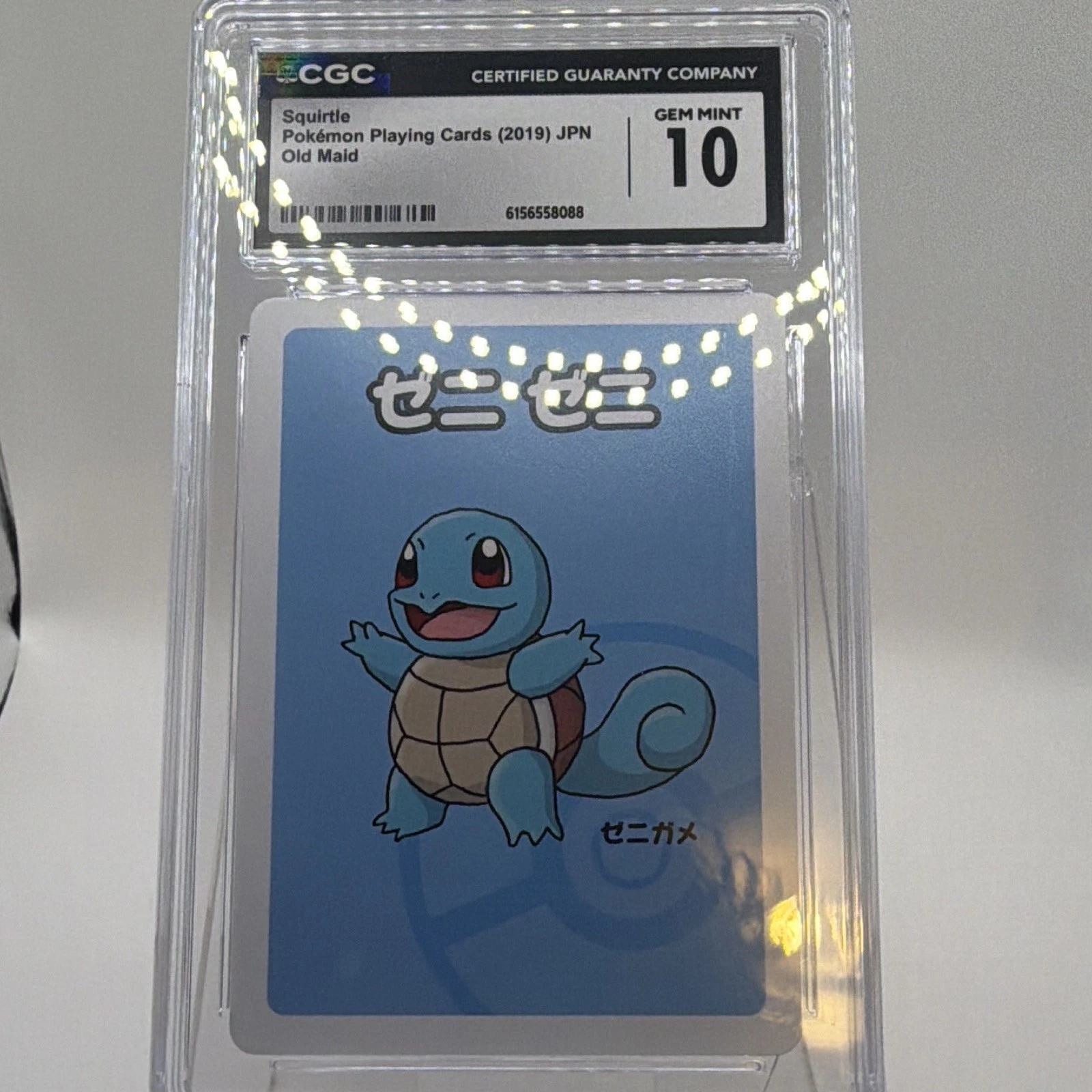
PSA — Value services are temporarily paused, so the cheapest way in is Regular.
- Regular — $79.99/card, max insured value $1,500, 40–50 business days
- Express — $149.00/card, max $2,500, 20–30 business days
- Super Express — $349.00/card, max $5,000, 10–15 business days
- Walk-Through — $599.00/card, max $10,000, 7–10 business days
CGC — the cheapest tiers in the hobby, and the slowest.
- Bulk — $17/card, max $500/card, 25-card minimum, 150 working days
- Economy — $20/card, max $1,000, 90 working days
- Standard — $55/card, max $3,000, 10 working days
- Express — $100/card, max $10,000, 5 working days
- WalkThrough — $300/card, max $100,000, 2 working days
Associate and Premium CGC members save 10% on grading; Elite members save 20%.
Beckett — read the availability column before the price column.
- Base — $14.95/card, 75+ business days — sold out
- Base with subgrades — $17.95/card — sold out
- Standard — $34.95/card, 45 business days — sold out
- Express — $79.95/card, 15 business days — available
- Priority — $124.95/card, 5 business days — available
Why is the PSA premium so large?
Because far more PSA slabs exist, which makes them easier to sell. As of 20 August 2026, the population reports for that same Charizard ex read:
PSA has graded roughly twelve copies for every one CGC has. Across the whole English Obsidian Flames set it is 246,587 at PSA against 60,460 at CGC. More slabs in circulation means more buyers with saved searches, more completed sales to price against, and a shorter wait to find a bid. That liquidity is what the premium buys.
There is a second, less discussed reason. CGC splits the top of its scale — its population report runs Gem Mint 10, then Pristine 10, then Perfect 10 above it. A CGC Gem Mint 10 is therefore not CGC’s top grade, while a PSA 10 is PSA’s. Some of the discount is about which 10 you got, not only whose slab it is in.
When is CGC the better choice?
Three situations, and they are specific.
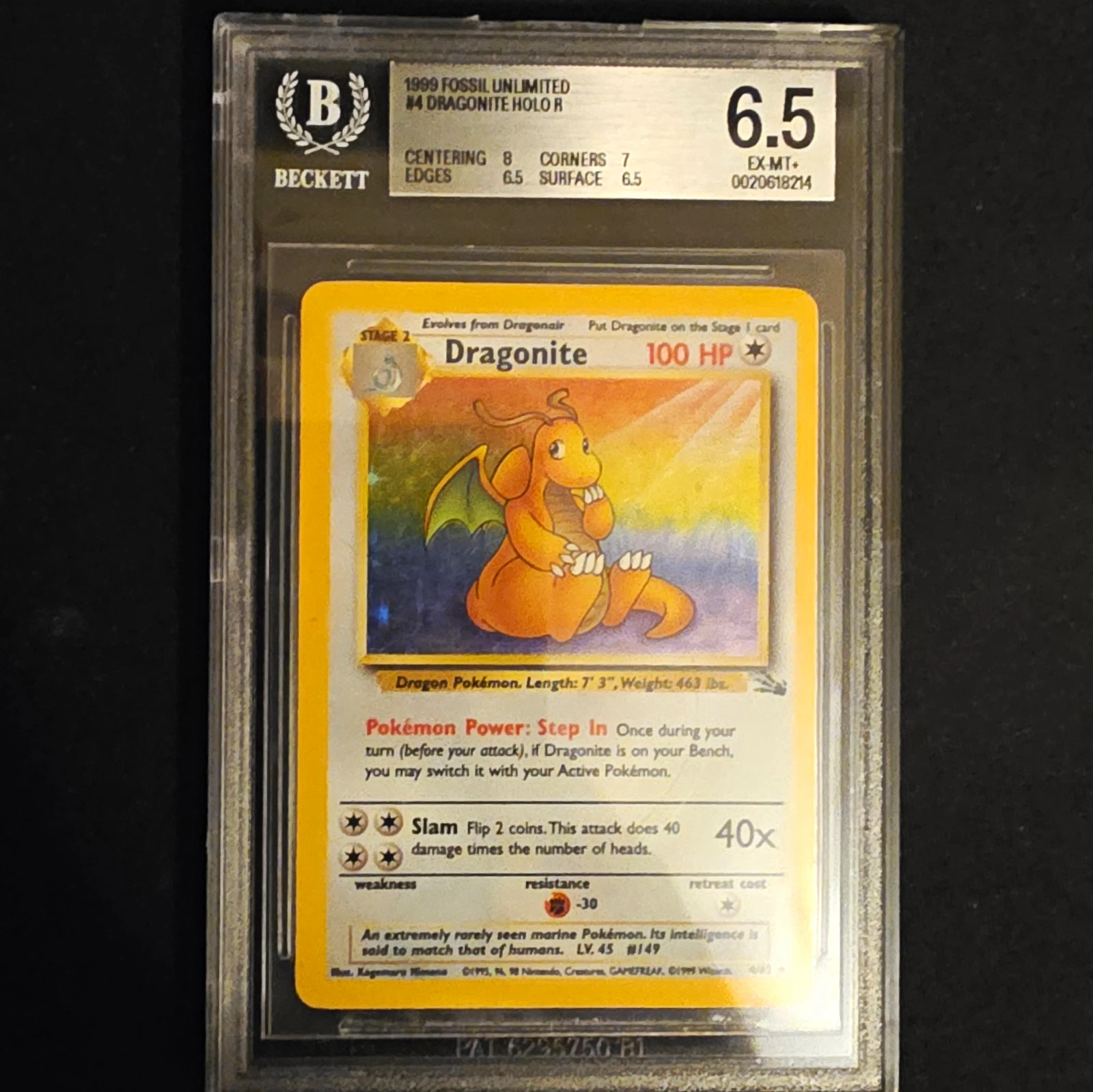
You have twenty-five or more mid-value cards. CGC Bulk is $17 per card against PSA’s cheapest available tier at $79.99. On twenty-five cards that is a difference of roughly $1,575 — which is the difference between a submission that can pay for itself and one that cannot. The catch is 150 working days, call it seven months of calendar time, and a $500 per-card value ceiling on that tier.
You want it back this month. CGC Standard is $55 per card at 10 working days. PSA’s nearest equivalent on speed is Express at $149 per card and 20–30 business days — CGC is cheaper and roughly twice as fast at that point on the curve.
You are not selling. If the card is going into a case for ten years, the resale premium is theoretical and the fee is real. Grade it with CGC and keep the difference.
When is Beckett the better choice?
When you want to know exactly why the card graded the way it did. Beckett is the only one of the three that prints all four subgrades — centering, corners, edges, surface — on the label, and grades in half-point increments. For a card you are keeping, or one you are sizing up before deciding whether to crack and resubmit elsewhere, that is real information the other two do not give you.
The Black Label — a Pristine 10 with 10s across all four subgrades — still carries real prestige and real money. It is also brutally rare, and chasing it with a card out of a binder is a way to spend $79.95 finding out your centering is 60/40.
Outside those two cases, Beckett is hard to recommend for Pokémon right now. It costs a penny under PSA at the entry point, its cheap tiers are unavailable, and the sold-listing volume above tells you what the exit looks like.
Does the slab itself matter?
Less than people argue about it. PSA encapsulates in a sonically sealed, tamper-evident case. Beckett has rebuilt its label around anti-counterfeit features — holographic metallic material, a hidden UV pattern, a light-reactive badge, and a QR code resolving to the cert. All three are sealed, and all three can be checked against the grader’s own database, which is the part that actually protects you. Look the cert up before buying any slab secondhand.
What to actually do
- Grading a card to sell it? PSA. The premium is larger than the fee difference on anything worth grading in the first place.
- Grading twenty-five or more mid-value cards? CGC Bulk, and plan on seven months.
- Need it back in two weeks? CGC Standard at $55 beats PSA Express at $149 on both price and speed.
- Keeping the card, not selling it? CGC or Beckett. You are buying protection and a cert number, not liquidity.
- Want the four subgrades on the label? Beckett, at $79.95, eyes open.
Before committing, look up your own card rather than trusting the pattern above. The spread varies enormously by card, and on plenty of cards there is none at all because nothing has sold in either slab. Filter eBay to completed sales and search yours twice — once with “PSA 10”, once with “CGC 10”. If the medians are close, the cheaper grader wins.
Amazon
Card Savers (semi-rigid holders)
All three graders want a penny sleeve inside a semi-rigid, not a toploader. Same requirement whichever you pick.
The honest caveat
Every number here is one card on one day. It is a heavily traded modern card, which makes the comparison clean, but it is not a law of nature. Vintage behaves differently, Japanese cards behave differently again, and fee schedules change.
The direction is steadier than the numbers: PSA sells for more, CGC costs less and moves faster, Beckett tells you more. Pick based on which of those you actually need.
And if you are weighing this up because you are getting ready to sell, the answer for most collections is not to grade at all — the wait is long, the fees are per card, and only a handful of cards clear the bar. Send us photos and we’ll tell you which ones, if any, are worth submitting before you sell to anyone, ourselves included. Offers come back within 24 hours, there is no minimum, and we buy in any condition.
Common questions
- Is PSA or CGC better for Pokémon cards?
- PSA, if you are grading in order to sell. On the Charizard ex 223/197 from Obsidian Flames, PSA 10 copies sold on eBay for a median of $780 between 19 July and 11 August 2026, while CGC Gem Mint 10 copies of the same card over the same window sold for a median of $350. CGC is cheaper to submit to and much faster at the mid tiers, which matters if you are grading to protect a card rather than to sell it.
- How much does PSA cost compared to CGC and Beckett in 2026?
- As of 20 August 2026, PSA’s cheapest available tier is Regular at $79.99 per card, because Value services are paused. CGC’s cheapest is Bulk at $17 per card with a 25-card minimum, then Economy at $20. Beckett lists Base at $14.95, but Base, Base-with-subgrades and Standard are all sold out, so Beckett’s real entry price is Express at $79.95 per card.
- Why do PSA slabs sell for more than CGC slabs?
- Depth of market. As of 20 August 2026, PSA had graded 56,821 copies of the Obsidian Flames Charizard ex 223/197 against CGC’s 4,890 — roughly twelve times as many. More graded copies means more buyers watching, more completed sales to price against, and a faster sale. Buyers pay for that liquidity.
- Is a CGC 10 the same as a PSA 10?
- Not quite. CGC’s population report splits the top of its scale into Gem Mint 10, Pristine 10 and Perfect 10, so a CGC Gem Mint 10 sits below two higher CGC designations. PSA’s 10 is a single top grade. Part of the price gap between a PSA 10 and a CGC Gem Mint 10 is that difference in labeling, not just brand preference.
- Should I crossover my CGC or Beckett cards to PSA?
- Only if the spread on that specific card is larger than the crossover fee plus shipping both ways, and only if you are confident the card holds its grade. You are paying full price for a service that can return the card untouched in its original holder. On a card where the PSA premium is a few hundred dollars it can be worth it; on most cards it is not.