Selling Part of a Collection: What to Keep and What to Let Go
Most people do not want to sell everything. Splitting a collection well gets you most of the money and keeps the cards you actually care about, as long as you split it along the right line.
Almost nobody actually wants to sell a whole collection. They want the space back, or they want the money out of the part they stopped caring about, and they want to keep the dozen cards that mean something.
That is a completely reasonable thing to want, and it is achievable. The mistake is splitting the collection along the wrong line, which turns one straightforward sale into two awkward ones.
The line that works and the line that does not
There are two ways to split a collection, and they produce very different outcomes.
Splitting by category works. Sell all the modern, keep all the vintage. Sell the bulk, keep the binder. Sell the sealed, keep the singles. The buyer gets something coherent that they can evaluate and price as a unit, and you keep something coherent that still feels like a collection.
Splitting by individual card mostly does not. Going through a collection pulling out every card you might miss leaves a buyer with a pile that has had its best cards removed and no clean way to describe what is left. It is still saleable, but it is saleable as bulk, and the offer will reflect that.
That is not a buyer being difficult. If the forty cards carrying the value are gone, what remains genuinely is bulk, whatever its card count.
Decide what you are optimizing for
Before you touch anything, answer this, because the whole plan follows from it.
If you want money, keep almost nothing and sell the cards that carry value. The top of a collection is where nearly all the money lives, and keeping it while selling the bulk gets you the space but very little cash.
If you want space, sell the bulk. Twelve thousand commons occupy almost all the physical volume and almost none of the value, so moving them solves the room problem and barely touches the collection’s worth.
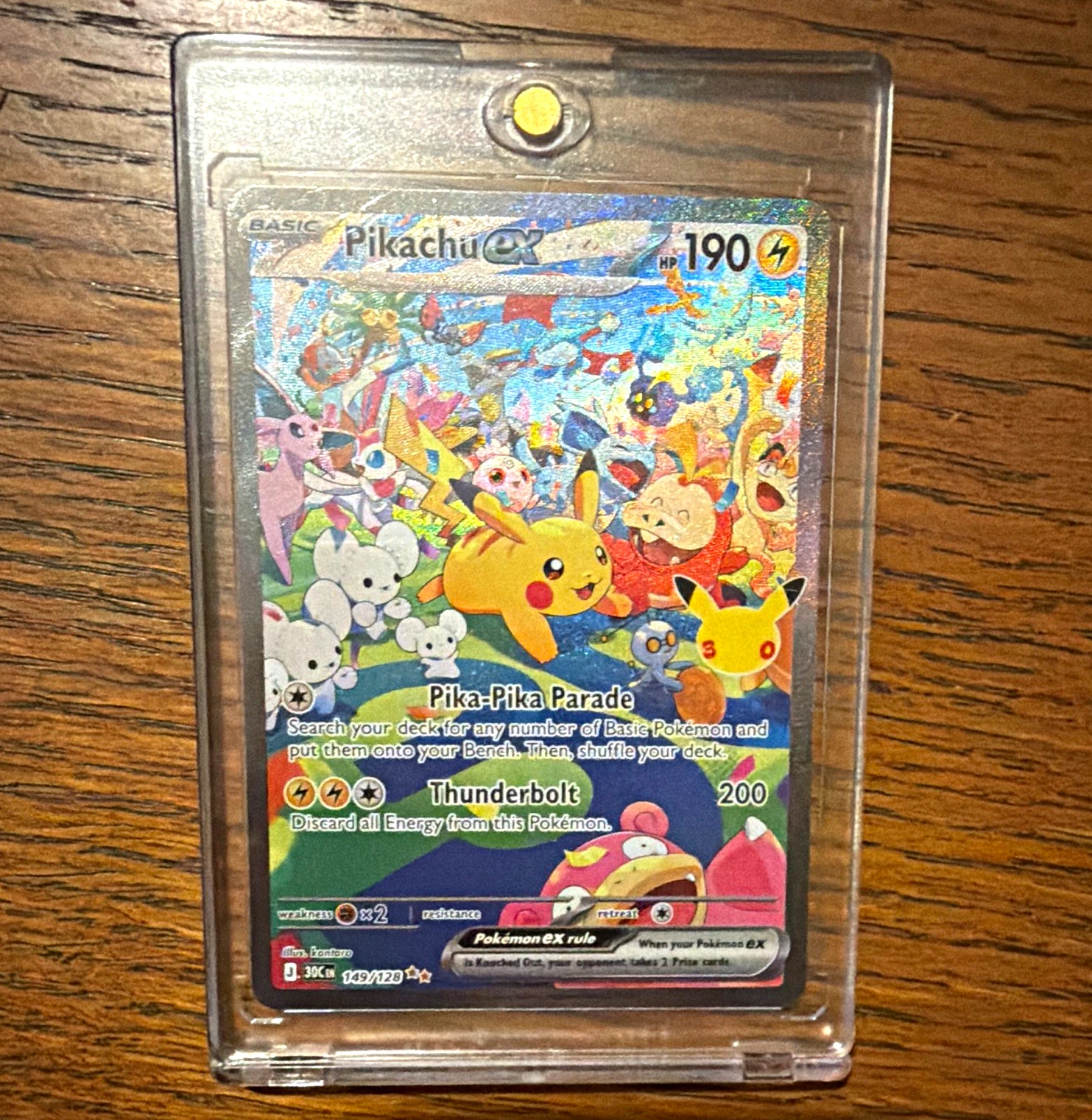
If you want out of the hobby but with a souvenir, keep a small number of specific cards, five or ten, and sell the rest as one unit. This is the cleanest version of a partial sale and it works well for everyone involved.
If you cannot answer the question, that is useful information too, and the answer is probably to not sell yet.
How to choose what to keep
Three filters, in this order.
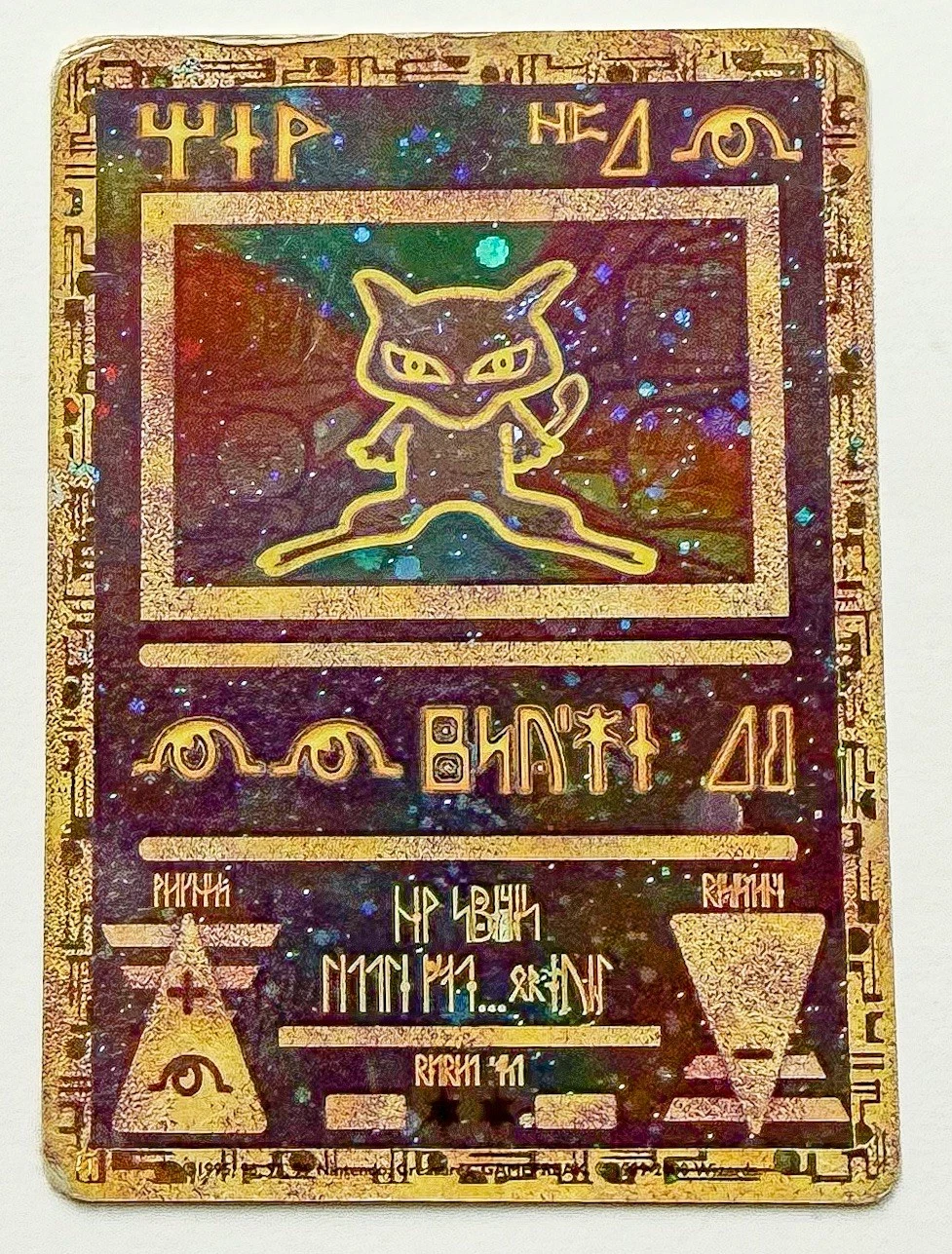
Sentiment. The card from the pack you opened as a kid, the one your brother gave you, the one you pulled at a prerelease. These are the easiest decisions in the whole process and they should be made first and without reference to price. If a card matters to you, keep it and stop analyzing it.
Specific conviction. Not “cards go up,” which is not a thesis, but an actual reason: this Pokemon is popular and the print run was small, this set is finished and copies are leaving circulation. Write the reason down. If you cannot write a sentence, it belongs in the sell pile.
Everything else goes. The pile of cards you are keeping because you have not decided is the pile that will still be in a closet in five years, slowly getting worse. Undecided is a decision, it is just a bad one.
Tell the buyer what you did
This is the part that makes a partial sale go smoothly, and it costs you one paragraph.
Say plainly what you have removed. “I have kept twelve vintage holos and the graded cards; everything else is here” is an honest, complete description, and it lets a buyer price what is actually in front of them without wondering what else is missing.
What goes badly is a collection described as complete that turns out to have been picked over. The buyer finds out while sorting, the trust evaporates, and a sale that would have been fine becomes a renegotiation. Nobody minds that you kept your favorites. People mind finding out later.
The same honesty applies to condition and to how it has been stored. Our note on what to write down is in how to count a collection without counting every card.
Sequencing: which half to sell first
If you are splitting, you do not have to do both halves at once, and the order matters a little.
Selling the bulk first clears the space, makes the remaining collection easier to work through, and gets a slow, low-value job out of the way while you are still motivated. The downside is that it is the half that returns the least, so you do a lot of work for a modest return before seeing much money.
Selling the good cards first gets you most of the money quickly, which is satisfying, but leaves you holding the tedious half with the motivation spent. A lot of people in this situation never get around to the bulk, which is fine if you have the room and annoying if you do not.
One thing to avoid: selling the good cards piecemeal over months while telling yourself you will deal with the rest eventually. That is the route that ends with an unsellable remainder and a collection you no longer enjoy.
When not to split
Sometimes keeping it together is simply worth more, and it is worth recognizing those cases.
A complete set is worth more complete. Pulling three cards out of a finished set to keep them can take a meaningful premium off the whole thing, because what made it valuable was completeness.
A run of sealed product from the same era is similar. So is a graded set registry run. In all of these, the collection is the item, and a partial version of it is a different and lesser item.
If you are not sure whether what you have falls into this category, that is worth asking before you start pulling cards, because it is the one version of this decision that is hard to undo.
Pricing the half you are selling
Once the split is made, the half you are selling needs a number, and the method depends on which half it is.
If you kept the bulk and are selling the good cards, price each one individually off recent sold listings in its actual condition. There will not be many, so this is an hour’s work and it is the hour that determines what you get. Identify the set properly before looking anything up, because the same artwork across different printings can differ by a factor of ten. How to price Pokemon cards covers the process.
If you kept the good cards and are selling the bulk, do not price it card by card, because no individual card justifies the effort. Estimate the count, describe the eras honestly, and expect bulk rates. Bulk Pokemon cards value sets realistic expectations for what that looks like.
Either way, the thing that gets you a credible offer is specificity. A list of twenty cards with conditions beats a photograph of a pile every time.
Keeping the half you kept
A short note, since the cards you keep are the whole point of doing this.
Whatever you held back is now a much smaller collection, which means it is finally practical to store properly. Sleeves for everything, a binder or a box that closes, somewhere with stable temperature and no humidity. Twelve cards stored well will outlast twelve thousand stored badly.
It is also worth photographing them and writing down what they are, partly for insurance and partly because a small, documented collection is far easier to value later than a large undocumented one. How to store Pokemon cards has the specifics.
The short version
Split by category, not card by card. Decide first whether you are optimizing for money or for space, because selling the bulk and selling the good cards solve opposite problems.
Keep cards for sentiment or for a reason you can write in a sentence, and let the undecided pile go. Tell the buyer exactly what you removed. And check whether what you have is a set or a run before you break it, because that is the one split that cannot be reversed.
Common questions
- Can I sell part of a Pokemon collection?
- Yes, and for most people it is the better outcome. The practical constraint is that a buyer taking the remainder needs it to still be a coherent thing to buy, which means splitting along sensible lines rather than removing cards at random.
- Does cherry-picking the good cards lower what the rest is worth?
- It lowers the total, obviously, but it does not usually lower the per-card value of what is left. What it does change is the offer structure: a collection with its best cards removed is mostly bulk, and bulk is priced as bulk.
- What should I keep?
- The cards you would be sad to see go, and cards you have a specific reason to think will do better later. Not cards you are keeping because you cannot decide, which is how people end up with four boxes they never look at.
- Is it better to sell the good cards or the bulk first?
- Sell the bulk first if your goal is space, and the good cards first if your goal is money. The bulk takes up most of the room and carries little of the value, so which one to move depends on what problem you are solving.