What Are My Pokémon Cards Worth If They're Not Graded?
A raw card is worth what identical ungraded copies sold for. How to read eBay sold comps, which condition flaws move the number, and when raw beats grading.
Short version: an ungraded Pokémon card is worth whatever identical ungraded copies have actually sold for in the last month or two — not a price guide’s headline number, and not a graded price with a discount applied to it. Raw and graded are two separate markets with two separate sets of buyers, and the raw one is much larger.
That matters more than most people expect. A raw card is often worth more than the grading route would leave you with once fees and turnaround are counted, and the condition thresholds that genuinely move a raw price are fewer and blunter than the grading conversation suggests.
How do I price a raw Pokémon card off eBay sold listings?
Price a raw Pokémon card by searching eBay for the exact card, filtering to Sold Items, and taking the middle of the last ten or so sales of copies in similar condition to yours. Asking prices are not evidence of anything. Only completed sales are.
The steps, in order:
- Identify the card precisely. Set name, card number (the “4/102” in the bottom corner), and any variant — 1st Edition stamp, shadowless, reverse holo, promo stamp. A missed variant is the single biggest source of wrong valuations.
- Search the exact string. “Charizard 4/102 base set unlimited” beats “charizard holo rare”. Include the card number.
- Filter to sold and completed. On eBay this is the Sold Items filter in the left sidebar. Everything above that filter is fiction until someone pays it.
- Exclude the graded results. Sold slabs will dominate the list for anything valuable. You want raw sales only, so ignore every result showing a PSA, CGC or Beckett case.
- Match the condition, not the average. Open the photos on the sold listings and compare them to your card. A raw sold average blends mint copies and creased ones.
- Take the median, then subtract fees. The sold price is what a buyer paid, not what the seller kept.
There is a longer walkthrough of this process in our guide to pricing Pokémon cards from sold comps.
Why do two price sites disagree by two times on the same card?
Two price sites disagree because they are measuring different things: one averages every completed sale including damaged copies, and the other reports what clean copies are listed at in a retail marketplace. As of August 2026, PriceCharting shows an ungraded Base Set Charizard at about $437, while the TCGplayer figure shown alongside it is about $856 for the same card.
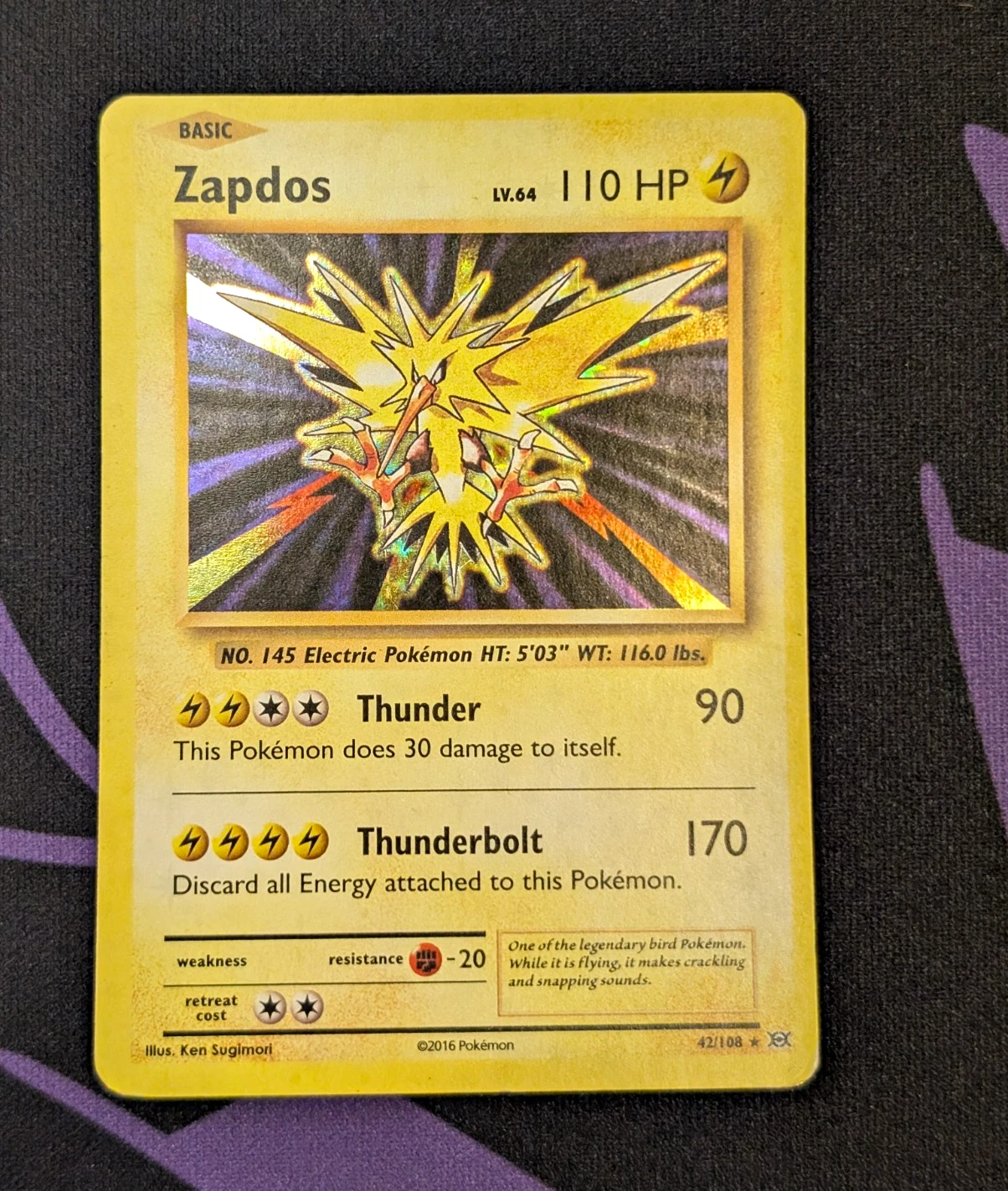
Neither number is wrong. The ungraded average is dragged down by the very large number of 1999 Charizards that have been in a binder, a shoebox or a child’s pocket for twenty-seven years. The retail figure describes a Near Mint copy that a shop has already sorted and graded by eye.
The practical lesson: when someone quotes you a raw price, ask which condition it describes. If you don’t know, you don’t have a price — you have a range.
Which condition problems actually change the price?
Four things move a raw Pokémon card’s price materially: surface creases, corner whitening, edge whitening, and centering. Scratches on holo foil matter less than people fear. A crease matters far more than people expect, because a crease is the one flaw that is visible in a phone photo from across a room and cannot be talked away.
TCGplayer’s published condition definitions are the standard the raw market runs on:
| Band | What it means | What it does to the price |
|---|---|---|
| Near Mint | Nearly unmarked surface, crisp corners, unblemished edges outside a few slight flaws | The reference price. Every other band is a discount off this |
| Lightly Played | Minor edge wear, scuffs or scratches; no significant imperfections | A small discount. Most buyers barely flinch |
| Moderately Played | Edge and surface wear, scratching or scuffing, bends with creases | The first real drop. This is where a crease usually lands a card |
| Heavily Played | Major wear, creasing, whitening and other faults | A large discount, but the card still sells |
| Damaged | Tears, splitting, liquid exposure, damage affecting the card’s integrity | Sells only if the card is scarce enough to be wanted in any state |
One Canadian retailer we checked prices its Base Set holos on a fixed ladder off Near Mint: Lightly Played at 90%, Moderately Played at 70%, Heavily Played at 50% and Damaged at 40%. That is a shop’s pricing formula rather than sold data, and real eBay sold prices are not that tidy — but it is a reasonable starting sketch, and it tells you the shape of the curve.
What the tidy ladder hides is where the cliff actually is. For expensive vintage cards, the gap between “clean” and “visibly creased” is much steeper than 30%, because the buyer of a $400 Charizard is often buying it as a grading candidate. For cheap cards the ladder barely exists at all, because nobody is paying a premium for a mint 40-cent common. Our Pokémon card condition guide walks through how to assess each flaw on your own cards.
Why is my common Pokémon card only worth a few cents?
A common Pokémon card is worth a few cents because postage and selling fees consume almost the entire sale price, not because the card itself is worthless. The card is real; the economics of shipping one card are the problem.
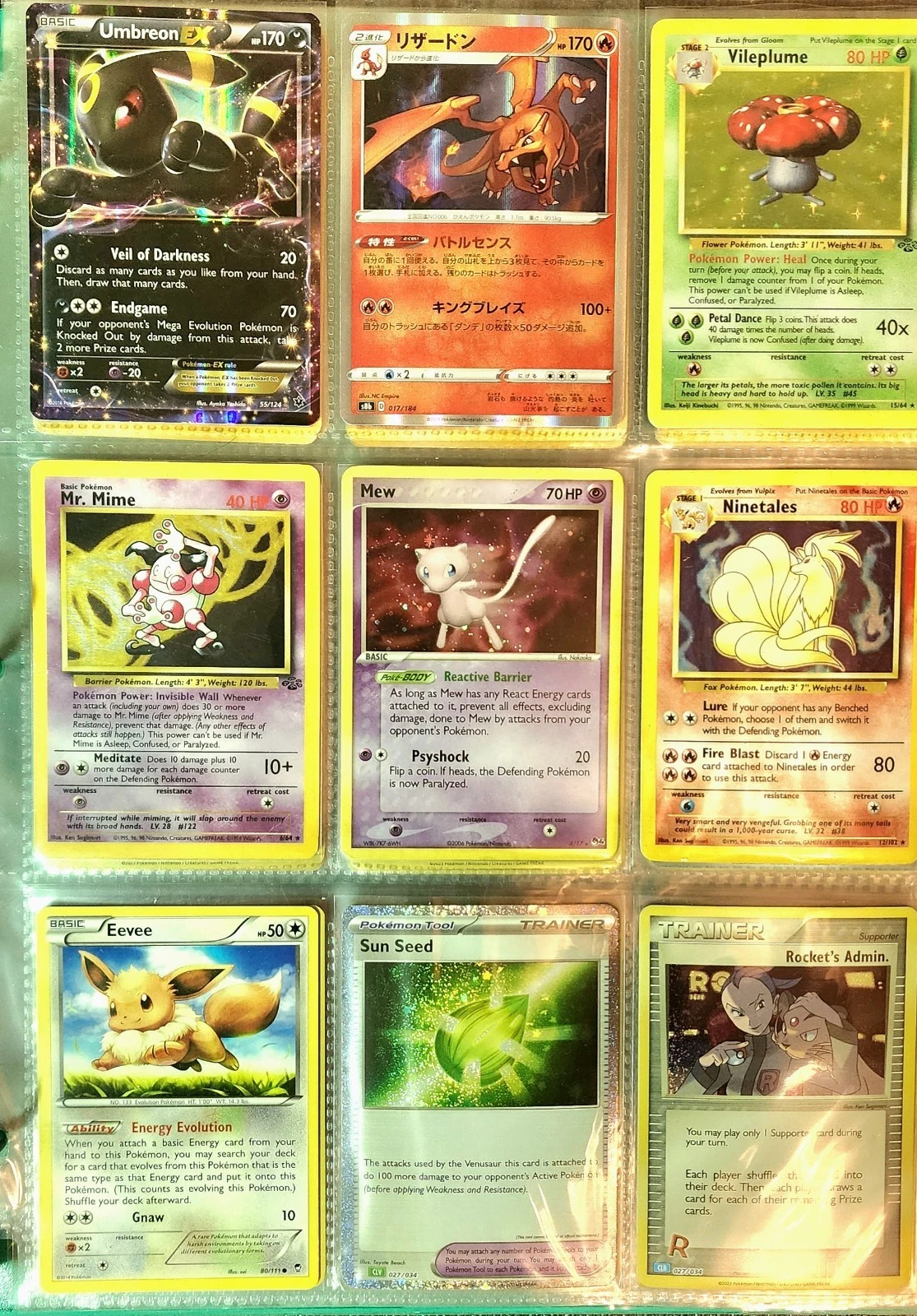
Here is the arithmetic on a Base Set Machoke, which sold for about $1.34 raw as of August 2026:
| Line | Amount |
|---|---|
| Sale price | $1.34 |
| eBay final value fee (12.35%) | −$0.17 |
| Per-order fee (orders $10 or under) | −$0.30 |
| eBay Standard Envelope postage, 1 oz | −$0.74 |
| Seller keeps | $0.13 |
That is thirteen cents for identifying the card, listing it, sleeving it, writing an address and walking to a post box. The card is not the constraint. The envelope is.
This is why anything under roughly $5 is normally sold in lots rather than singly, and why buyers of bulk pay by weight or by the thousand rather than by the card. If most of your collection is commons and non-holo rares, our note on what bulk Pokémon cards are actually worth is the more relevant page.
When is a raw Pokémon card worth more than a graded one?
A raw card beats the grading route whenever the grading fee plus the realistic grade outcome leaves you level with or behind the raw price. As of August 2026, PSA’s Value service tiers are paused, so the cheapest tier actually available is Regular at $79.99 per card, with a 70 to 80 business day turnaround and a $1,500 maximum declared value. Cards worth more than that need Express at $149.00.
The clearest live example is the Umbreon VMAX alternate art from Evolving Skies, card 215. As of August 2026:
| Umbreon VMAX #215 | Price |
|---|---|
| Ungraded (raw) | ~$2,230 |
| PSA 7 | ~$1,700 |
| PSA 8 | ~$1,843 |
| PSA 9 | ~$2,119 |
| PSA 10 | ~$4,175 |
Read that table slowly. A raw copy sells for more than a PSA 9 of the same card. Because the raw price exceeds Regular’s $1,500 declared value ceiling, grading it means $149 and a month of waiting for a coin flip where three of the four realistic outcomes leave you worse off than doing nothing. Only a 10 pays, and a modern alternate art with a black border is exactly the kind of card that fails on edge whitening.
The opposite case is just as clear. Base Set holos from 1999 reward grading heavily:
| Card (Base Set, Unlimited) | Raw | PSA 7 | PSA 8 | PSA 9 |
|---|---|---|---|---|
| Charizard #4 | ~$437 | ~$773 | ~$1,313 | ~$2,909 |
| Blastoise #2 | ~$81 | ~$228 | ~$357 | ~$1,018 |
| Venusaur #15 | ~$70 | ~$179 | ~$253 | ~$565 |
A Base Set Blastoise that grades a PSA 7 — a card with visible wear — is worth roughly three times the raw average. That gap exists because so few 1999 cards survived clean that buyers will not trust an unslabbed one, and the raw average is weighed down by rough copies.
So the rule of thumb is not about the card’s value. It is about the spread:
- Grade when the raw price is far below the low graded grades. Vintage holos, where a PSA 7 still doubles the raw number, are the classic case.
- Stay raw when the raw price already sits near the PSA 9 price. Modern chase cards with big raw markets usually fall here.
- Stay raw when the card is visibly played. A card that will grade 5 or 6 rarely returns the fee.
- Stay raw when you need the money in under three months. A 70 to 80 business day queue is most of a year’s patience.
We go through this decision in more depth in whether grading your Pokémon cards is worth it.
The short version
- A raw Pokémon card is worth its sold comps, matched to its condition — not a price guide headline and not a graded price minus a guess.
- Two price sites can differ by two times on the same card because one averages all conditions and the other quotes Near Mint.
- Creases and whitening move a raw price. Minor holo scratches mostly don’t.
- Under about $5, shipping and fees are the price. Sell those cards in lots.
- Grading wins on vintage holos with a wide raw-to-graded spread. It usually loses on modern cards whose raw price already sits near the PSA 9 number.
Theo TCG buys Pokémon collections, and we price every offer from recent sold comps rather than a guide’s list price. If you’d rather not do the comp-hunting yourself, send us photos of your cards and we’ll tell you what they’re worth raw, which ones we think are worth grading first, and which ones are only worth selling as part of a lot — including when the honest answer is that you should keep them.
Common questions
- How much are my Pokémon cards worth without grading them?
- An ungraded Pokémon card is worth whatever identical ungraded copies have recently sold for on eBay, adjusted for how clean yours is. Grading does not add value to a card; it removes the buyer’s uncertainty about condition, and the buyer pays for that certainty. For most cards the raw sold price is the real price, and the graded price is a different product entirely.
- Do I need to get my Pokémon cards graded to sell them?
- No. The raw market for Pokémon cards is large and liquid, and for most cards grading costs more than it returns. The cheapest PSA grading tier available as of August 2026 is Regular at $79.99 per card with a 70 to 80 business day turnaround, so a card has to gain well over $80 in value from the slab before grading breaks even.
- What does raw mean for a Pokémon card?
- Raw means ungraded — the card has not been sent to PSA, CGC or Beckett, and is not sealed in a numbered plastic slab with an assigned grade. A raw card is normally sold in a penny sleeve and a top loader. Sellers describe raw condition themselves, usually as Near Mint, Lightly Played, Moderately Played, Heavily Played or Damaged.
- Why are my Pokémon cards worth so little on eBay?
- For cards under roughly $5, postage and selling fees eat most of the sale price rather than the card being worthless. A Pokémon card that sells for $1.34 nets the seller around $0.13 after eBay Standard Envelope postage of $0.74, a 12.35% final value fee and a $0.30 per-order fee. This is why common cards are normally sold in bulk lots rather than one at a time.